Policy and Commitment
(1) Environmental Pollution Prevention
Shimizu thoroughly conducts pre-construction reviews and evaluations, ensures compliance with procedures during construction, and maintains proper records and storage, including the following, to prevent environmental pollution in construction work.
- Treatment of construction wastewater
- Proper treatment of hazardous substances such as asbestos and PCBs
- Soil contamination countermeasures
(2) Water Resources
Shimizu regards water as an essential resource for a sustainable society and is undertaking company-wide efforts to use water resources effectively and to reduce and avoid the impacts of water use. In our business activities, we are advancing water resource conservation from three perspectives: offices, job sites, and R&D. The specific policies for each perspective are shown in the table below.
| Office activities | Reduce waste, use recycled water |
|---|---|
| Job sites | Use the technology we possess to improve efficiency, reuse water, and manage wastewater discharge |
| R&D | Research water reuse and treatment technology |
Management System
Management
Operation of an Environmental Management System Based on ISO 14001
Shimizu has obtained ISO 14001 certification. We identify environmental risks and opportunities in our business activities and have established and operate a system that continuously applies the PDCA (Plan, Do, Check, Act) cycle.
Development of Company-Wide Forms and Guidebooks at Job Sites and Information Sharing
To understand environmental risks at job sites and to ensure construction work is carried out appropriately, we have developed company-wide forms and guidebooks for use at both the pre-construction and construction stages. We have also established a system to properly store construction plans and construction records and to enable sharing among relevant parties, building not only worksite-level coordination structures but also company-wide coordination structures to carry out our business activities.
The status of water withdrawal and discharge by business-related category, along with the corresponding management plans, is shown in the table below. Based on these management plans, we work to use water resources effectively at all of our jobsites.
| Category | Status of main uses of water resources | Water resource management plan | |
|---|---|---|---|
| Job sites (in Japan) | Water withdrawal (municipal potable water, groundwater, surface river water*) |
|
As indicated below, management is performed according to the specific characteristics of the site and surrounding environment at each site.
|
| Water discharge (off-site water treatment) |
|
||
| Job sites (Overseas) | Same as in Japan | Nearly the same as in Japan | |
| Offices in Japan & overseas | Water use: Municipal potable water | Water used for daily activities | Initiatives in Water Recycling
|
| Wastewater: off-site water treatment discharge | Wastewater from kitchen, washing/flushing, and rainwater | ||
| Supply chain |
|
|
|
Shimizu obtains the proper permits for using groundwater, surface/river water, etc. in areas where municipal potable water cannot be used.
System
Reporting and Deliberation at Company-Wide Committees
At Shimizu, the Safety and Environment Committee, chaired by the Executive Vice President, conducts reporting and deliberation on safety and environmental activities. In addition, the Sustainability Committee, chaired by the President, deliberates on various environmental management issues and receives reports on matters, including the progress of SHIMZ Beyond Zero 2050.
Involvement of Top Management through ISO 14001
The ISO 14001 framework requires leadership and commitment from management. At Shimizu, the needs and expectations of internal and external stakeholders, as well as social trends, are identified, and internal activities and performance are reviewed through a top management review. Information obtained through audits is reported to top management as audit reports, and the resulting comments and instructions are issued as top management instructions, deployed company-wide, and incorporated into environmental activities.
Targets and Performance
Environmental Pollution Prevention
At Shimizu, the company-wide environmental action plan sets the elimination of environmental law violations and serious environmental incidents as key targets. With zero legal violations and zero accidents as management indicators, we work to prevent environmental pollution.
Over the past three years, there have been zero serious environmental incidents, zero legal violations (including those related to water), and no fines. For treatment results on air pollutant emissions and fluorocarbons, etc., please refer to the environmental performance data.
Water Resources
To reduce water use at its own facilities, Shimizu installs water-saving faucets and toilets when constructing new office buildings or when rebuilding or renovating. Where site and facility conditions permit, we also actively promote the use of rainwater and gray water. The same principle applies to design-build projects, where the introduction of water-saving equipment is proposed as a standard practice.
In the construction industry, the volume of groundwater inflow and its discharge during construction is overwhelmingly greater than the volume of water used in the operation of the company’s own facilities. These volumes depend on site and ground conditions. In design-build building construction, measures such as proposing reductions in basement levels are possible; however, in projects designed by other companies, particularly civil engineering works, setting quantitative targets is difficult. Accordingly, we emphasize appropriate water intake in compliance with legal standards and discharging water with properly managed water quality. Zero environmental law violations and zero serious environmental incidents, including those related to water, are established as company-wide targets.
Furthermore, in carrying out business activities, including construction work, we recognize water risks at each of our domestic and overseas business sites. Taking daily water-saving actions within individual operations is positioned as a daily activity target under the company-wide environmental action plan.
For water use and wastewater discharge results, as well as the amount of research and development investment aimed at reducing water-related risks, please refer here.
Initiatives
Environmental Pollution Prevention
Shimizu promotes the proper treatment of construction wastewater generated through construction work and the management of hazardous substances through employee development through education, the preparation of forms and guidebooks, and technological development.
Proper Treatment of Construction Wastewater
Wastewater discharged from jobsites primarily consists of groundwater inflow, rainwater, and inflow water from rivers and other sources. Recognizing that neighboring and downstream communities use this water, we measure the quality of the discharged water and treat it to meet predetermined standards before discharge. These fundamental requirements are compiled in the Manual on Prevention of Water Pollution at Work Sites and the Construction Wastewater Treatment Plan Check Sheet for use at jobsites.
June is designated each year as Water Pollution Prevention Promotion Month, during which company-wide awareness activities are conducted.
Prevention of Asbestos Dispersion
Shimizu places the highest priority on the safety and security of customers and society and promotes appropriate measures regarding asbestos. No asbestos-containing building materials are used at new jobsites. For asbestos contained in demolition and renovation work of existing buildings, we comply with all relevant laws and regulations and conducts proper prior investigations, removal, containment, or enclosure, ensuring safe and reliable processing.
We have developed various proprietary technologies, including real-time monitoring devices, volume-reduction equipment, and dispersion-prevention agents. We also promote employees' acquisition of asbestos-related qualifications. Since prior asbestos investigations for demolition and renovation work are now legally required to be conducted by qualified personnel, we have implemented intensive internal qualification training programs. Alongside qualification acquisition, we work to enhance employees’ knowledge of asbestos and strengthen management capabilities to prevent contamination and health damage.
Prevention of Leakage of Chemical Substances Such as PCB, Dioxins, and Fluorocarbons
Because various chemical substances may arise in construction work, we identify all anticipated environmental risks before project commencement. We prepare a Worksite Priority Management Sheet and a Legal Violation Prevention Sheet, and conducts pre-commencement review meetings with quality, safety, and environmental personnel to confirm the appropriateness of construction plans. Given the significant environmental and human health impacts of PCBs and dioxins, procedures and work methods are carefully reviewed in advance, and specialized departments conduct audits and site patrols to ensure compliance.
Prevention of Public Nuisance from Noise, Vibration, Odor, and Dust
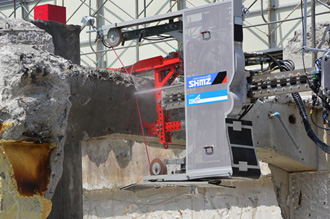
To minimize the impact of noise, vibration, odor, and dust generated by construction work on surrounding areas, we have established guidebooks and ensure strict compliance with laws and regulations. Measures to prevent public nuisance include the proactive use of low-noise heavy machinery, careful operation of construction equipment, and installation of soundproof sheets. In demolition work in particular, we have developed and implemented the Cool Cut Method, which suppresses noise, vibration, and dust at the source. Through these efforts, Shimizu considers local communities and contributes to creating a comfortable environment.
Technology / Solution: Shimizu Cool Cut (low-vibration, low-noise demolition) (Only on Japanese)
Water Resources
Conservation of Water Resources and Management of Water Risks at Job Sites
For water discharged from jobsites, Shimizu places strong emphasis on water quality management, recognizing that this water may be reused in neighboring and downstream areas. Before construction begins, treatment plans are prepared in compliance not only with the Water Pollution Control Act and the Sewerage Act, but also with local ordinances and requests from surrounding communities.
After construction begins, simple treatment tanks (notch tanks) or large-scale turbid-water treatment plants are installed, depending on the volume and scale of use. Daily and priority management are carried out under voluntary management standards that are stricter than statutory requirements.
We also conduct site patrols and audits and maintain strict control through to project handover, thereby contributing to the conservation of regional water resources.
Conservation of Water Resources in Offices
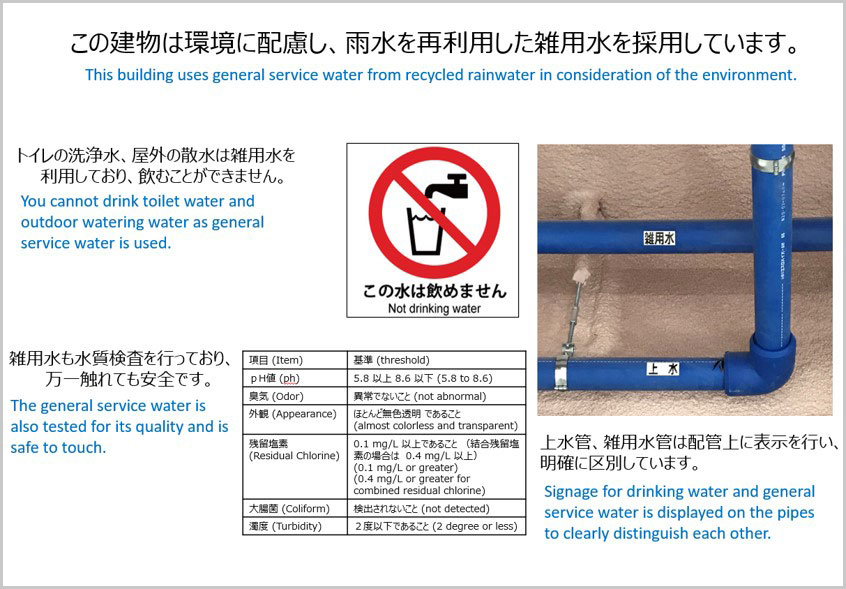
At the new Tohoku Branch office building completed in March 2021, rainwater and well water are reused for toilet flushing and outdoor water sprinkling as part of water resource conservation efforts. The building has obtained the highest level of WELL Certification, Platinum, and provides an office environment designed with people’s health in mind.
At Smart Innovation Ecosystem, NOVARE the Company’s innovation base that began operations in September 2023, rainwater drainage is used for water features and plant irrigation within the Former Shibusawa Garden. An irrigation optimization system based on weather forecast data has been introduced. When sufficient rainfall is forecast, irrigation volume is reduced, and the water supply is adjusted based on the predicted remaining levels in the rainwater utilization tank. This increases the rate of rainwater substitution and promotes the effective use of water resources. Rainwater drainage is also used as firefighting water for the Former Shibusawa Residence.
Through these initiatives, Shimizu works to conserve water resources and reduce water use not only at jobsites but also in our offices and company-owned facilities.
Environmental Pollution Remediation Technology
R&D Related to Water Resource Conservation including PFAS
Per- and polyfluoroalkyl substances (PFAS) are used in various products, such as coatings and foam extinguishing agents. In recent years, however, their persistence and accumulation in the environment and living organisms have been recognized as a problem, and regulations are being tightened in Japan and abroad.
We have been engaged in R&D on purification technology for PFAS-contaminated water since 2021. A field test conducted in Okinawa Prefecture to purify PFAS-contaminated water confirmed the usefulness of the technology when contaminated water with a concentration of 634 nanograms (ng) per liter was purified to a concentration of less than 1 ng per liter.
In the future, we will roll out the technology to facilities where PFAS may have been sprayed and job sites where PFAS was manufactured or used, thereby contributing to water quality preservation.
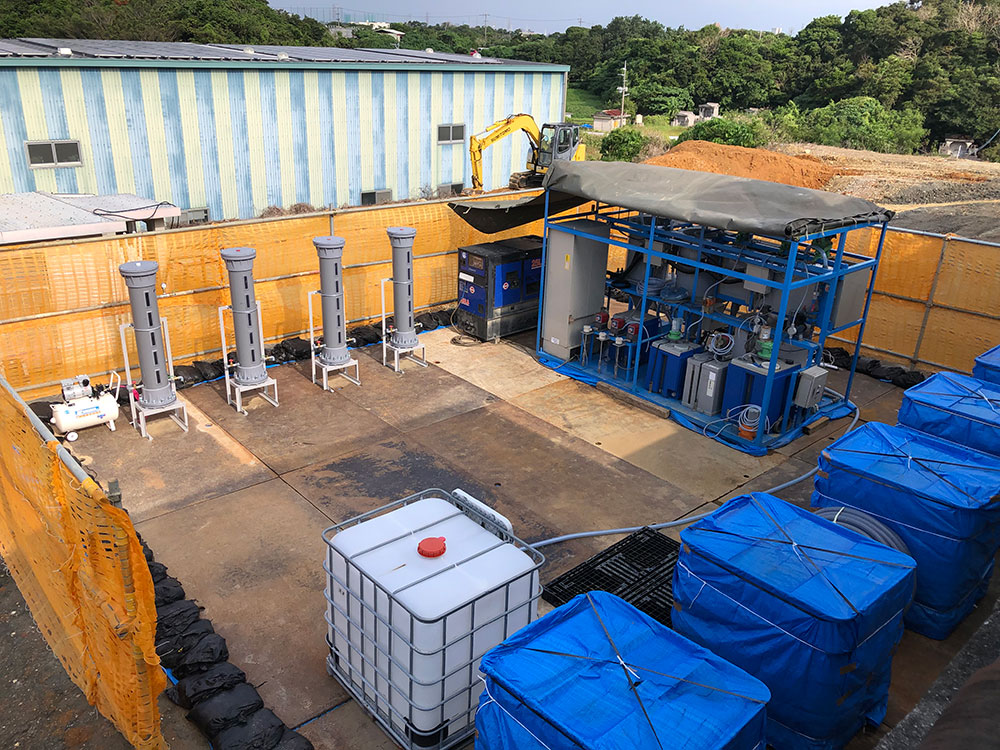
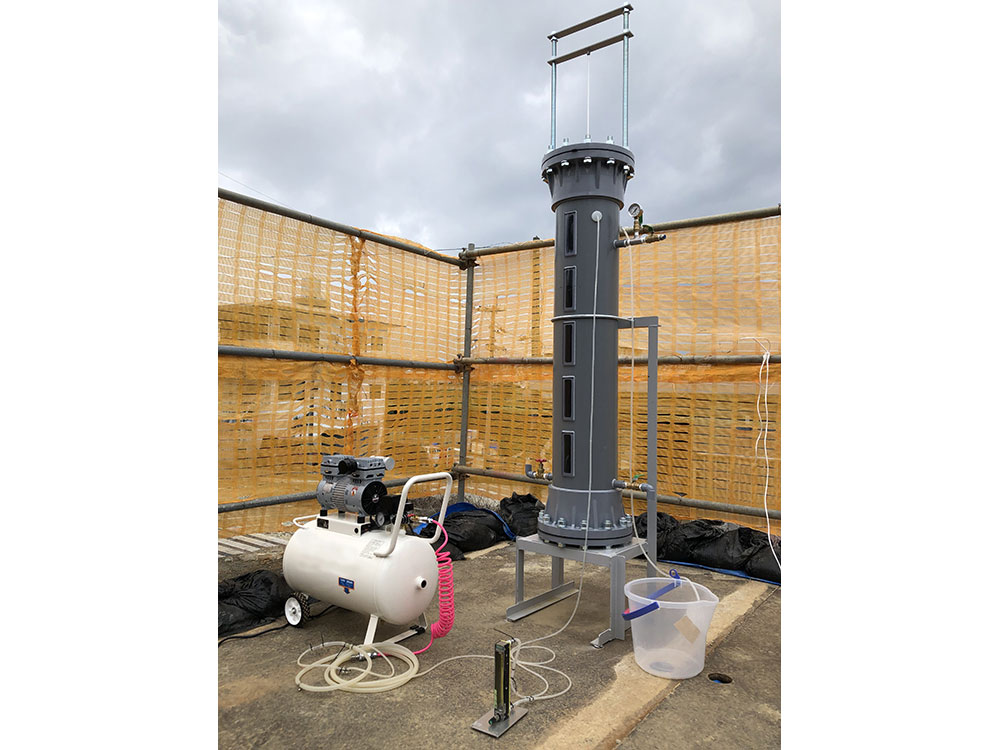
- Shimizu Develops Technology to Purify PFAS-contaminated Water (Only in Japanese)
- Shimizu's Engineering: Initiatives to Purify PFAS-contaminated Soil and Water (Only in Japanese)
Soil Contamination Countermeasure Technologies
In addition to complying with the Soil Contamination Countermeasures Act, Shimizu proactively works to prevent soil contamination and implement appropriate countermeasures. We possess a wide range of technologies effective for the remediation of contaminated soil and promote tailored measures for each situation, thereby preventing and reducing soil contamination and contributing to safe land use.
Shimizu Engineering: Shimizu Soil Environmental Engineering
Overseas, we are engaged in the remediation of soil contaminated by defoliants sprayed by the U.S. military during the Vietnam War, which continue to cause serious health damage today. As the Vietnamese government aims to complete nationwide soil remediation projects by 2030, Shimizu is addressing this issue using our proprietary technologies. In collaboration with a research institution under the Ministry of National Defense of Vietnam, we have conducted demonstration tests for washing contaminated soil.
Vietnam’s land restored through Shimizu technology
Business Activities in Water-Stressed Regions in Japan and Overseas
Based on the Water Security Compass/2025, which provides water risk data and visualization information for the sustainable management of freshwater resources from the Global Water Cycle Research Initiative, we identify water risks at each of our overseas business sites and conduct business activities, including construction work, with those risks in mind.
The table below outlines business activities in regions where water risks are identified. Particularly in China, Thailand, Vietnam, and India, which are classified as “High” or “Medium to High,” we conduct business activities with a focus on thorough prior risk assessment and regulatory compliance in water risk management.
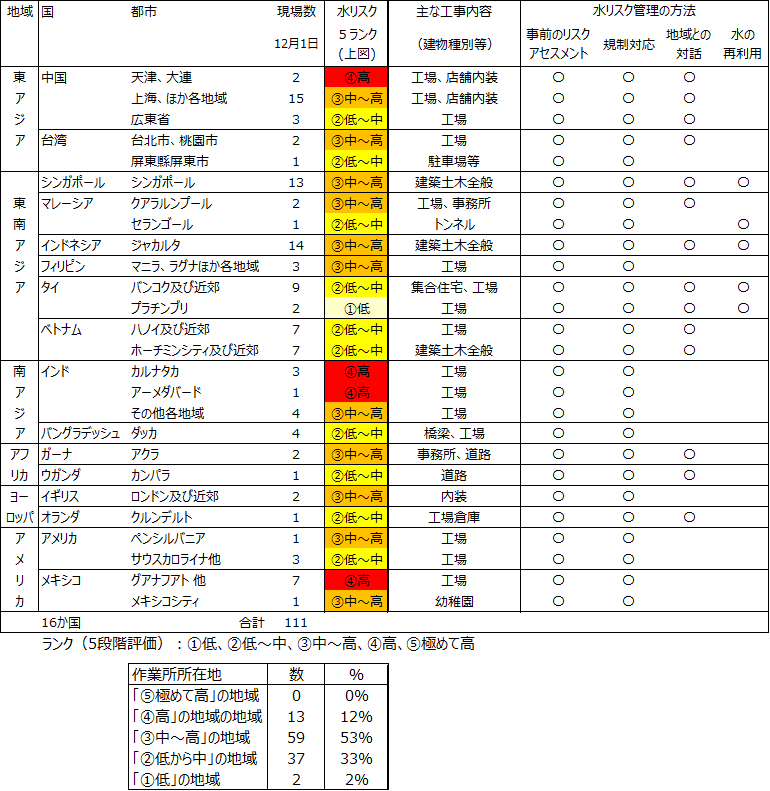
Source: Water Security Compass (2025), water risk data and visualization information for the sustainable management of freshwater resources provided by the Global Water Cycle Research Initiative and available at https://water-sc.diasjp.net, cross-referenced with our domestic and overseas bases to determine risk levels.
Memberships and Collaborations
| Category | Organization | Activity philosophy | Logo |
|---|---|---|---|
| Water | JWF | JWF serves as a hub for exchange and collaboration among domestic and international water stakeholders. It collaborates with a diverse range of stakeholders, including United Nations agencies, international organizations, development banks, governments and local authorities of various countries, private companies, researchers, and NGOs. Based on this network, the organization works to create opportunities to take action on solving water issues around the world, including Japan. It seeks to ensure that all people on earth can fully enjoy the benefits and value of water. |
 |
| The Water Cycle Company Registration/Certification Program | To further promote corporate initiatives that contribute to the water cycle, the Secretariat of the Headquarters for Water Cycle Policy under the Cabinet Secretariat operates the Water Cycle Company Registration/Certification Program. This system actively registers and certifies companies that are interested in or implementing initiatives that contribute to the water cycle. In October 2025, Shimizu was certified as a Water Cycle ACTIVE Company in recognition of its proactive efforts to support the water cycle. |
 |
|
| Kumamoto Rain Garden Partnership | The Kumamoto Rain garden Partnership is an organization established to voluntarily promote the development and dissemination of rain gardens. It was founded in May 2023 to develop 2,030 rain gardens within Kumamoto Prefecture by 2030. |
 |
Restoration and Utilization of Wetlands through Collaboration and Co-Creation between Industry, Government, Academia and the Private Sector
Yatsubori no Shimizu Yatsu
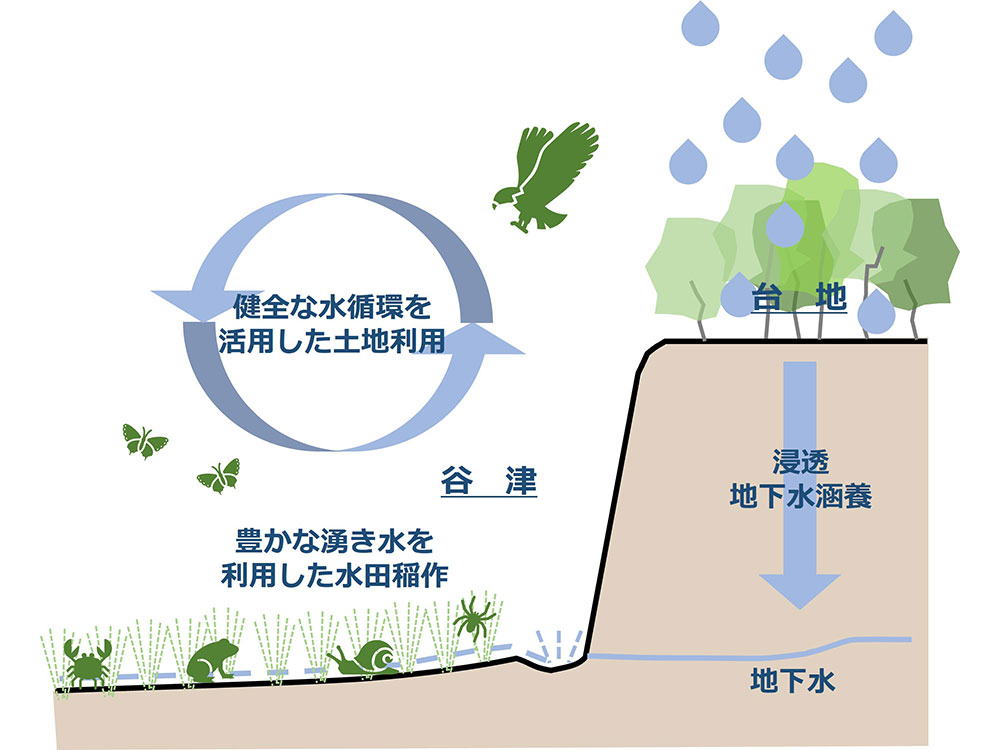
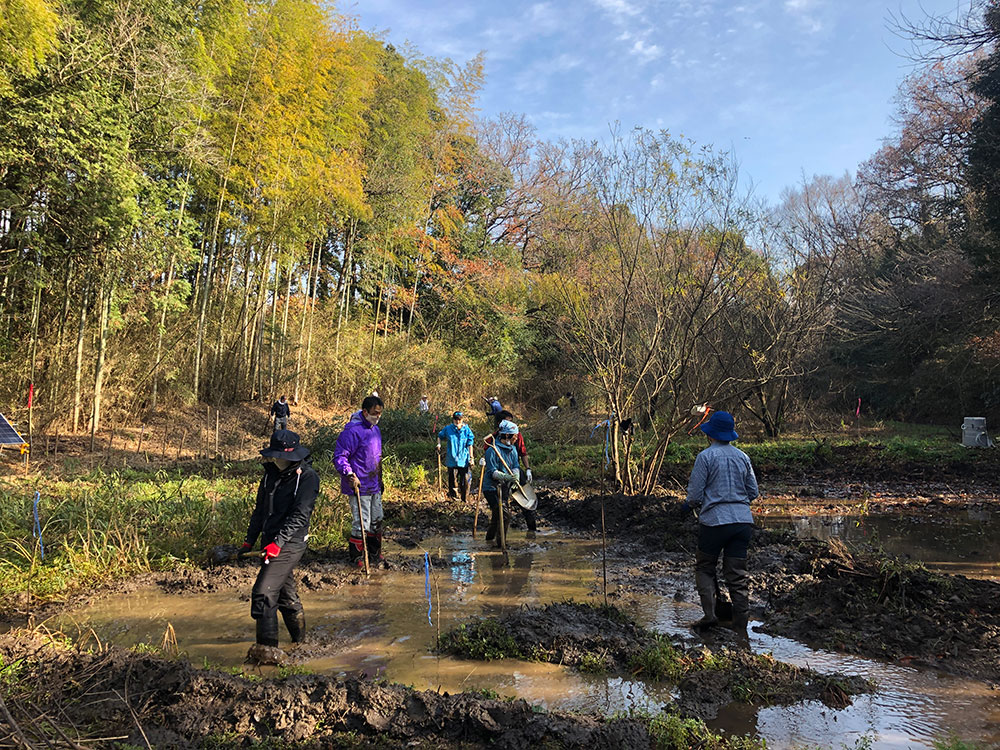
Since 2021, we have been promoting a green infrastructure project called Yatsubori no Shimizu Yatsu to regenerate the wetlands of small valleys* in Tomisato, Chiba Prefecture as multi-functional wetlands through collaboration between industry, government, academia, and the private sector. Enhancing water purification and rainwater storage functions, restoring wetlands may help maintain a healthy water cycle in the region and reduce the risk of flooding.
In fact, we were able to create a natural symbiosis that attracted many aquatic plants and animals that prefer the valley environment.We will continue to create wetland green infrastructure where people and nature can coexist and return nature's bounty to the region so that valley functions can be preserved for the future.
Yastu…Small valleys formed by erosion of plateaus and hills
- Yatsubori no Shimizu Yatsu (Only in Japanese)
- Yatsubori no Shimizu Yatsu received the Minister of Land, Infrastructure, Transport and Tourism Award in the 4th Green Infrastructure Awards. (Only in Japanese)
Through its activities at Yatsubori no Shimizu Yatsu, Shimizu was certified in October 2025 as a Water Cycle ACTIVE Company. This certification was granted under the Water Cycle Company Registration/Certification Program operated by the Secretariat of the Headquarters for Water Cycle Policy, Cabinet Secretariat. The system registers and certifies companies that are interested in or actively implementing initiatives that contribute to the water cycle, and recognizes those that are proactively advancing such efforts.
Kumamoto Rain Garden Partnership
A rain garden is a planted, recessed area designed to temporarily store rainwater from roofs and other surfaces rather than discharging it directly into the sewer system, allowing the water to gradually infiltrate the ground. By reducing the burden on sewer infrastructure, rain gardens provide flood control benefits and also contribute to biodiversity conservation and the soundness of the water cycle.
Today, urban flooding linked to climate change and the aging of infrastructure such as sewer systems have become significant social issues. In Kumamoto Prefecture, economic activity is increasing as the concentration of semiconductor-related companies grows. At the same time, concerns are growing over the rapid rise in water use by these factories and the potential future depletion of groundwater, while countermeasures against increasingly severe flood damage are also an urgent priority.
To help address these challenges, Shimizu joined the Kumamoto Rain garden Partnership*1 and developed a rain garden within the premises of its Kumamoto sales office in Chuo Ward, Kumamoto City. We intend to continue actively promoting the wider adoption of rain gardens.
1:The Kumamoto Rain garden Partnership is an organization dedicated to the development and dissemination of rain gardens within Kumamoto Prefecture. It operates through collaboration among industry, academia, government, and the community. Established in May 2023, it aims to develop 2,030 rain gardens in Kumamoto Prefecture by 2030.
https://www.kumamoto-ameniwa-partnership.com/