Policy and Commitment
The Shimizu Group has established greenhouse gas emissions reduction targets aligned with the 1.5°C level to achieve carbon neutrality by 2050.
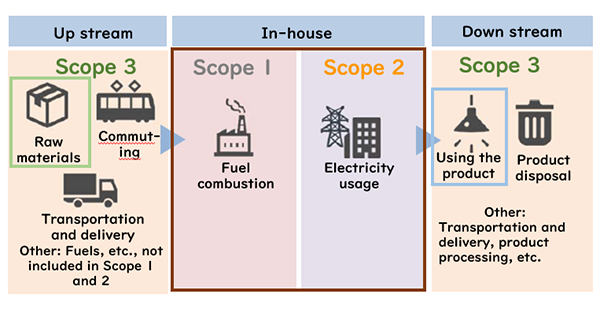
Based on these targets, we will not only reduce Scope 1 and Scope 2 emissions (during construction and the operation of our own facilities) but will also actively work to reduce Scope 3 emissions (such as during the manufacturing of materials and the operation of buildings) throughout the supply chain.
Furthermore, we will lead the transition to a decarbonized society by developing new decarbonization technologies, building green energy businesses, and constructing renewable energy facilities.
Current Status of CO2 Emissions of the Shimizu Group
The CO2 Emissions of the Shimizu Group have the following characteristics.
- Scope 1 and 2 account for 6%, while Scope 3 accounts for 94%, with the vast majority being Scope 3.
- Within Scope 1 and 2, CO2 emissions during construction account for 70%.
- Looking at the breakdown of Scope 3 emissions, those from manufacturing materials (Category 1) and from building operations (Category 11) account for 85%.
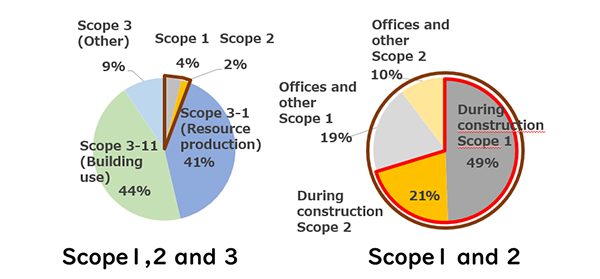
Based on FY2024 data
Management System
Management
To realize SHIMZ Beyond Zero 2050, we have defined the areas to be addressed under three categories: “Scope 1 and 2” for Zero, and “Scope 3 (mainly Categories 1 and 11)” and “contributions to emissions reduction” for Beyond.
(1) Reduction of CO2 Emissions at Construction Sites
To reduce CO2 emissions at construction sites and achieve carbon neutrality by 2050, we will work on (i) improving energy productivity, (ii) electrifying heavy equipment (shifting from diesel fuel to electricity), (iii) decarbonizing fuels, and (iv) using electricity derived from renewable energy.
(i) Improving Energy Productivity
To reduce energy consumption in construction, we are working to improve energy productivity by leveraging ICT-based construction, 3D models, and VR
Improving energy productivity through the use of ICT-based construction.
(ii) Electrification of Heavy Equipment (Shifting from Diesel Fuel to Electricity)
Depending on site conditions, we promote electrifying heavy equipment by adopting electric tower cranes instead of engine-driven crawler cranes and by switching soil transport from dump trucks to belt conveyors, thereby reducing CO2 emissions during construction. Large electric construction machinery is still in the early stages of adoption, and although our company is currently in the trial introduction phase, we aim to gradually expand its implementation through initiatives such as the Ministry of Land, Infrastructure, Transport and Tourism’s GX Construction Machinery Certification Program.
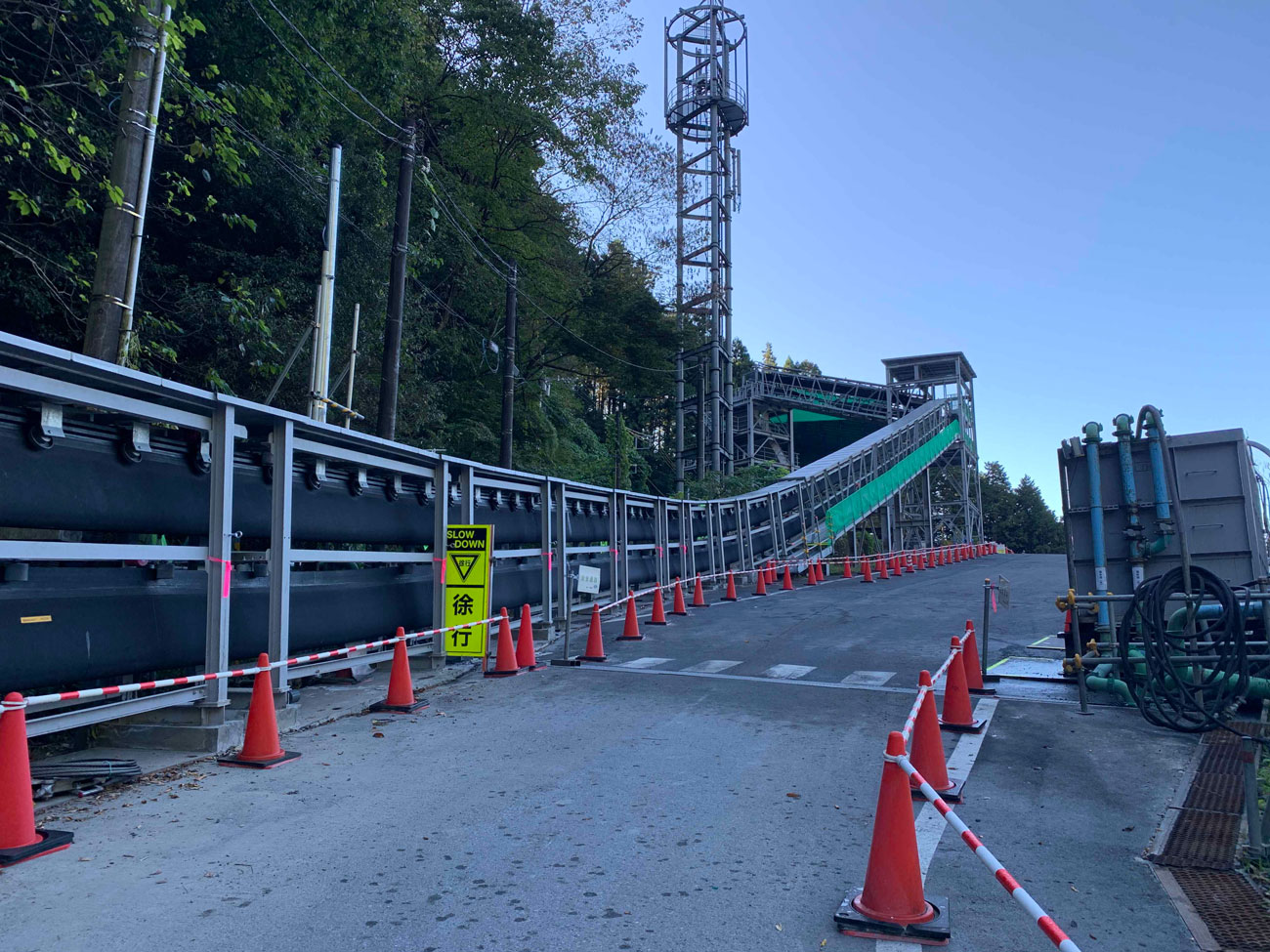
Transport of aggregates and soil using belt conveyors
(iii) Decarbonization of Fuels
By actively utilizing subsidy programs offered by local governments and other initiatives, we will switch from diesel fuel to BDF (biodiesel fuel).
- Use of alternative fuels to replace diesel fuel
- News release: “Development of new HVO blended fuel, establishment of its supply chain, and social implementation” was selected for the Tokyo Metropolitan Government’s Program for Supporting Technological Development Related to the Promotion of New Energy (Only in Japanese)
(iv) Use of Electricity Derived from Renewable Energy
By introducing green electricity at all construction sites for new projects starting in Japan, we aim to achieve zero CO2 emissions from electricity used in construction by FY2030.
(2) Reduction of CO2 Emissions at Our Own Offices
In addition to constructing buildings with high levels of environmental performance for our own offices, we are also promoting initiatives to achieve “zero carbon” through the use of offset credits.
- News release: Achieving “zero carbon” for energy used at the head office building (Only in Japanese)
- News release: Completion of the new Shimizu Hokuriku branch office building, an office with one of the highest levels of environmental performance in Japan (Only in Japanese)
- Business topic: A next-generation office that enables ways of working suited to the region and the times (Only in Japanese)
- NOVARE:GX×NOVARE (Only in Japanese)
(3) Reduction of CO2 Emissions through Energy-efficient Design
For buildings designed and constructed by our company, we aim for the average performance of new-construction buildings to achieve ZEB Ready by 2027 and Nearly ZEB by 2050.
Business topic: Transforming Japan’s future with ZEB
(4) Reducing CO2 at the Properties We Develop
In our real estate development and management, we are improving the energy-saving performance of rental properties, introducing electricity generated from renewable energy, and working together with tenants to reduce energy use. We have set forth four independent targets to contribute to a carbon-free society throughout the supply chain, namely, introducing electricity generated from renewable energy, reducing CO2 emissions, acquiring external environmental certification, and publishing energy consumption and other such data. We are also rolling out rental properties running on electricity generated from renewable energy featuring advanced energy-saving performance as part of our Green Property+® series.

System
In SHIMZ VISION 2030 and the Mid-Term Business Plan <2024-2026>, the Shimizu Group positions environmental issues, including climate change, as a key factor that significantly affects management.
Basic policies and measures related to environmental issues are deliberated by the Sustainability Committee (Chair: President). The Committee is composed of the officer responsible for sustainability as Vice Chair, the officer responsible for safety and environment, and officers responsible for each business division. It deliberates on the identification and evaluation of climate-related risks and opportunities and monitors progress toward CO2 emission reduction targets. The results of these deliberations are reported to the Board of Directors, which exercises oversight. In addition, the Environmental Strategy Office, which reports directly to the President, oversees initiatives aimed at achieving the Shimizu Group environmental vision, SHIMZ Beyond Zero 2050.
Key decisions regarding environmental issues are communicated to business divisions, including branches, and group companies through the Environmental Management Meeting and the Group Company Environmental Management Meeting. Through this structure, the Shimizu Group has established an environmental governance system that also encompasses major suppliers.
Governance system for climate change-related issues of the Shimizu Group
Targets and Performance
Actual CO2 emissions for each Scope in FY2023 and FY2024, as well as targets for FY2030 and FY2050, are shown in the table below. In addition, the financial impact of CO2 reductions and the CO2 reduction efforts achieved through our technologies and design and construction projects that are not counted in Scope 1, 2, or 3 are defined as “contribution to emissions reduction,” and their financial value is disclosed in our TCFD disclosures.
| Scope covered | FY2023 results | FY2024 results | FY2035 results | FY2050 results | |
|---|---|---|---|---|---|
| Scope 1+2 | Emissions (t-CO2) | 325,527 | 314,731 | 127,696 | 0 |
| Reduction rate (compared with FY2023) |
― | ▲3.3 % | ▲61% | ▲100 % | |
| Scope 3 (Category 1 + 11*1) |
Emissions (t-CO2) | 6,669,794 | 3,480,511 | 5,818,505 | 0 |
| Reduction rate | ― | ▲63% | ▲38% | ▲100 % |
| Scope covered | FY2023 results | FY2024 results | FY2025 results | |
|---|---|---|---|---|
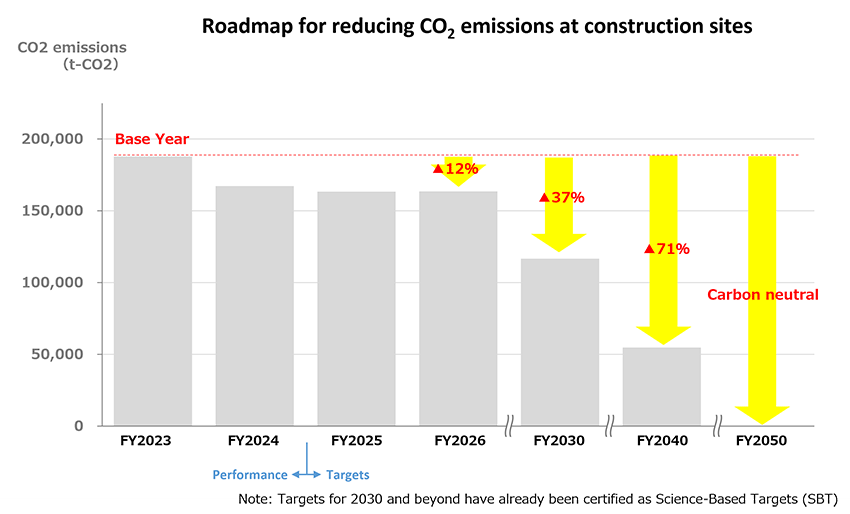
| Scope 1+2 | Emissions (t-CO2) | 187,955 | 167,351 | 177,498 |
| Reduction rate (compared with FY2023) |
― | ▲11% | ▲8% |
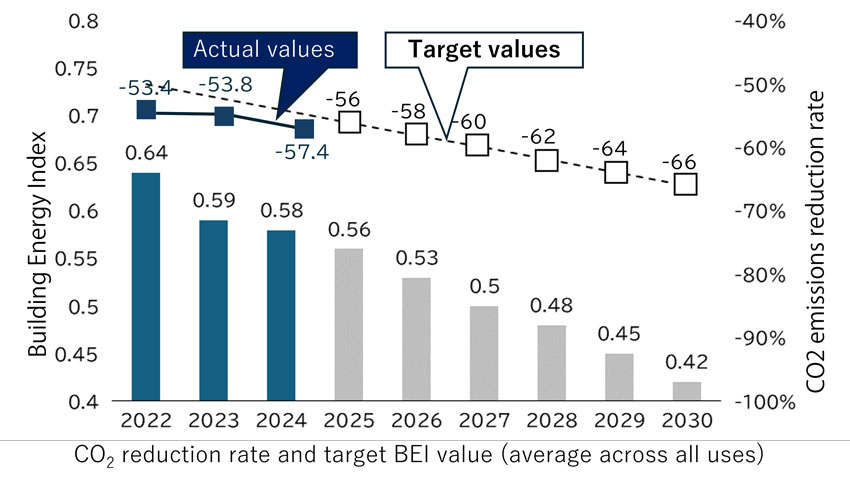
To reduce CO2 emissions during building operation, it is necessary to lower the BEI value specified under the Building Energy Efficiency Act through energy-efficient design. We have established annual target BEI values as shown in the figure below. By developing an AI-powered ZEB design tool to automatically search for proposals that meet ZEB, and by providing ZEB proposals tailored to client needs from the early planning stage of buildings, we will steadily work toward achieving these targets.
Initiatives
(1) Initiatives at Construction Sites
(i) Initiatives for CO2 Emission Reduction of Construction
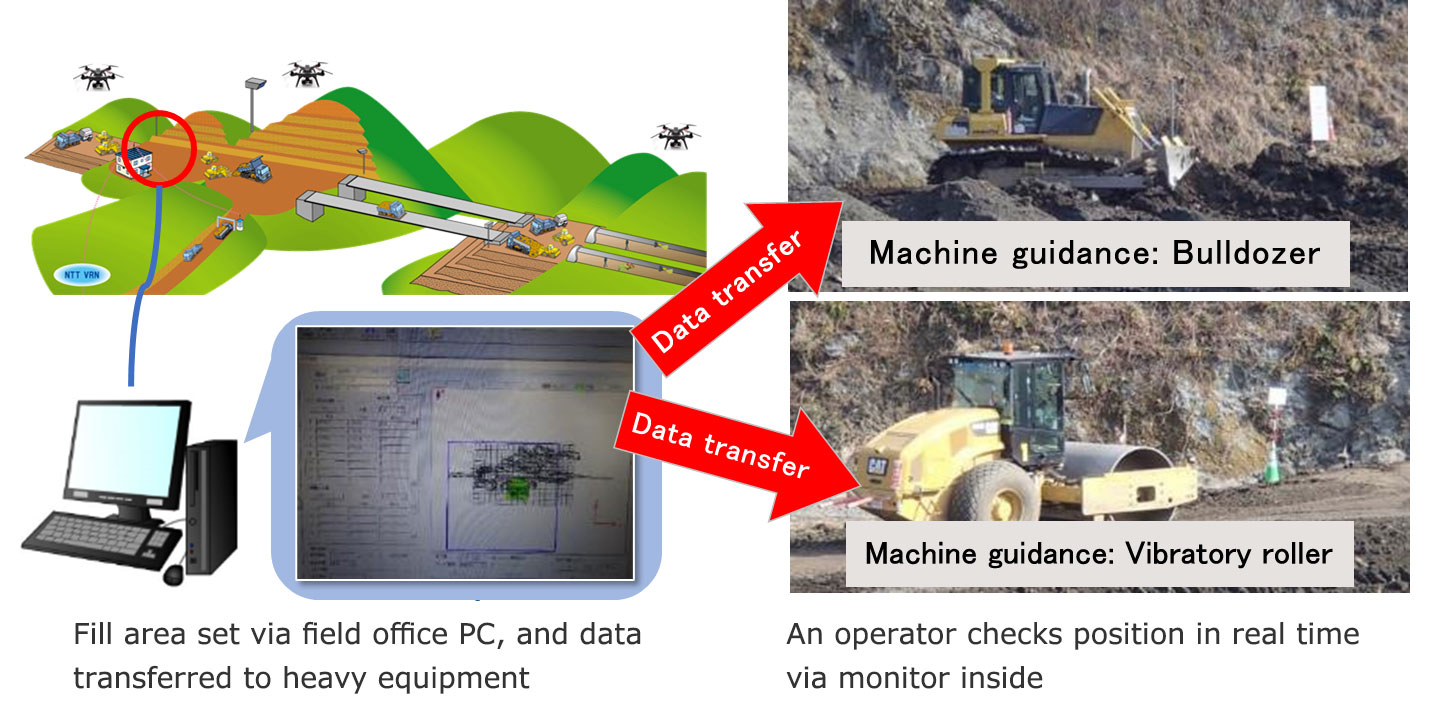
We are deploying ICT-based earthwork by displaying three-dimensional data, including measurement and design data, on a monitor inside heavy equipment, which enables heavy equipment operators to manage the construction conditions in real time. Optimal operation of construction machines improves construction efficiency, which allows us to reduce CO2 emissions (improve energy productivity).
(ii) Alternatives to Diesel Fuel
Most of the CO2 emitted at construction sites is due to the use of diesel fuel for heavy equipment. We are actively using environmentally friendly alternatives to diesel fuel, such as next-generation biodiesel fuel derived from microorganisms and Gas-to-Liquids fuel derived from natural gas, in our crawler cranes and others used at construction sites.
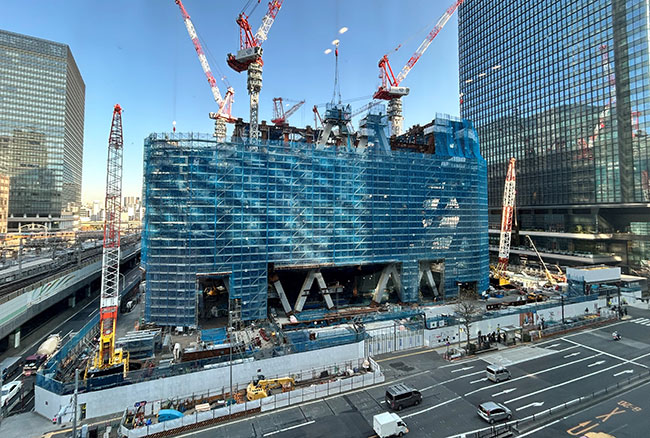
For example, at the construction site of Torch Tower (developer: Mitsubishi Estate Co., Ltd.; design supervision: Mitsubishi Jisho Design Inc.; construction location: Chiyoda Ward, Tokyo), scheduled for completion in 2028, the project was selected for the Tokyo Metropolitan Government’s Program for Supporting the Commercialization of Biofuel Utilization, and the next-generation biodiesel fuel “SUSTEO,” developed by Euglena Co., Ltd., was introduced.
(iii) Aggregate and Sediment Transport Using Belt Conveyors
By using belt conveyors to transport dirt, sand, and crushed stones generated during large-scale site preparation, tunnel construction, dam construction, and other projects, we can significantly reduce CO2 emissions generated by dump trucks. In addition to reducing CO2 emissions, the conveyors helps to reduce traffic congestion caused by trucks in urban areas.

(2) Initiatives at Our Own Offices
The head office building uses electricity generated by solar panels installed on the exterior walls to power its daytime lighting and also utilizes Aqua Premium green electricity derived from hydroelectric power generation (provided by TEPCO Energy Partners Co., Ltd.), thereby ensuring that all the electricity is carbon free.
We are also working to reduce CO2 emissions at our branch offices all over the country by gradually converting to net zero energy buildings (ZEB) and introducing green electricity.
(3) Initiatives for CO2 Emission Reduction during Building Operation from Energy - efficient Design
Currently, the popularization of ZEB is required to achieve the government’s target of carbon neutrality by 2050 as these buildings use significantly less energy.
Shimizu became the first company in Japan to realize a completely off-grid ZEB system with completion of the design and construction of Seicho-no-Ie's Office in the Forest in 2013. AEON MALL Toyokawa has become the first large-scale shopping center in Japan to be ZEB Ready※1 and Kawakita General Hospital the first acute care hospital in Tokyo to be ZEB Oriented※2. We have also undertaken renovation work, achieving『ZEB』※3status at the Tsukuba West Office (West-4 Building) of the National Institute of Advanced Industrial Science and Technology (AIST). We have also achieved 『ZEB』status at multiple distribution facilities, our Hokuriku Branch, and our NOVARE Hub.
In 2023, we developed a ZEB design tool. Utilizing AI, it automatically searches for proposals to achieve ZEB status, supporting ZEB proposals aligned with customer needs in the initial stages of building planning. This has made the review of ZEB conversion, which previously took a tremendous amount of time, more than 100 times more efficient. It has also allowed us to dramatically enhance the content of proposals.
- ZEB Ready : Primary energy consumption reduced to 50% or less through energy efficiency and conservation
- ZEB Oriented: Total floor space of at least 10,000 m2 and primary energy consumption reduced through energy efficiency and conservation while adopting unrated energy efficiency and conservation technologies
・In the case of offices, schools, plants, etc.: 60% or less
・In the case of hotels, hospitals, department stores, restaurants, meeting places, etc.: 70% or less - 『ZEB』:The most energy-efficient of the four types of ZEB, with primary energy consumption reduced to 0% or less through energy conservation and energy creation
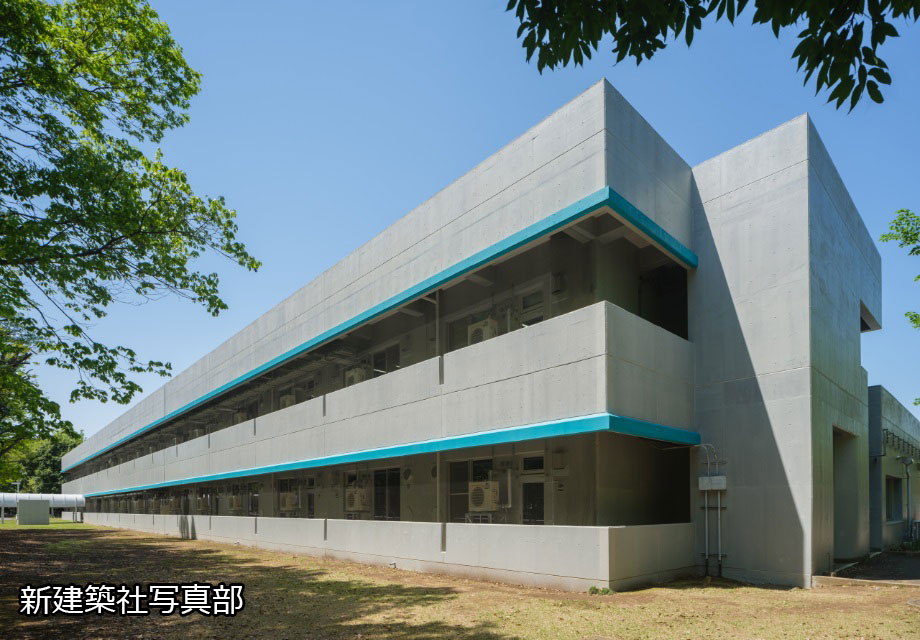
which underwent ZEB renovations
- Business topics: Realizing ZEB through sustainable renovation
- Business topics: Changing the future of Japan with ZEB
- News release: An AI Solution for ZEB Design Work (only in Japanese.)
(4) Reduction of CO2 Emissions at Our Own Development Properties
For initiatives to reduce CO2 emissions at our own development properties, please see here.
(5) Technologies and Services that Support a Decarbonized Society
(i) Life Cycle Assessment
Shimizu works to reduce CO2 emissions throughout the entire life cycle by utilizing the following life cycle assessment platforms.
「Shimz Carbon Assessment Tool」
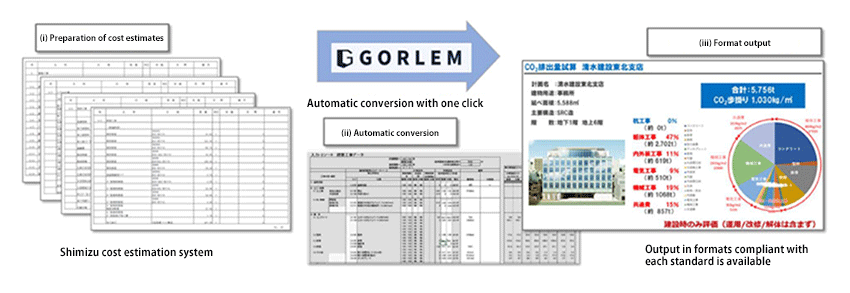
To achieve decarbonization, it is necessary to begin by understanding CO2 emissions. The CO2 emissions calculation platform Shimz Carbon Assessment Tool is a system that automatically calculates CO2 emissions generated during the construction production process using cost estimate data. By automating the series of calculation processes on this platform, the barrier to calculating CO2 emissions in construction production is significantly lowered, enabling the standardization of reporting and the provision of CO2 emissions data to clients. The platform is also used during the planning and design stage of buildings to conduct simplified CO2 emissions evaluations of design proposals by focusing on key items with significant impact, thereby promoting design proposals for low-carbon buildings based on quantitative evaluation.
「Civil-CO2」
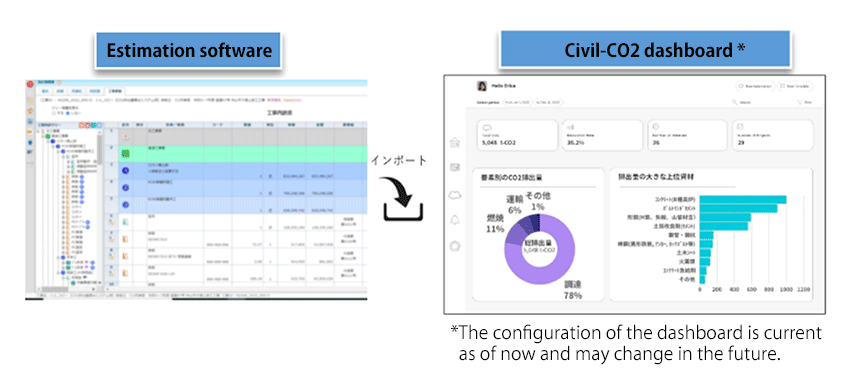
Civil-CO2 is a CO2 emissions visualization platform that automatically calculates CO2 emissions generated by civil engineering work based on accumulated data. By beginning full-scale operations of this platform, we will propose effective CO2 emissions-reduction measures based on prior CO2 emissions evaluations, including Scope 3, for civil engineering project bids and other projects. At the same time, we will apply this platform to past construction projects to analyze and understand the main factors behind CO2 emissions for each type of civil engineering work, such as roads, tunnels, bridges, and dams, and promote the on-site application of CO2 reduction technologies.
CO2 emissions calculations on this platform are based on estimates generated by estimation software. Estimation data is imported from the estimation software into the platform, and calculations begin automatically with a single click. The platform automatically matches information on construction materials and equipment used in the project with the associated CO2 emissions intensity factors and displays the calculation results on a dashboard by activity (by Scope) and by materials and equipment (by major emission sources).
Through this platform, the entire CO2 emissions calculation process is automated and standardized, significantly reducing the labor required for these tasks.
(ii) A Hydrogen Energy Utilization System for Buildings "Hydro Q-BiC®"
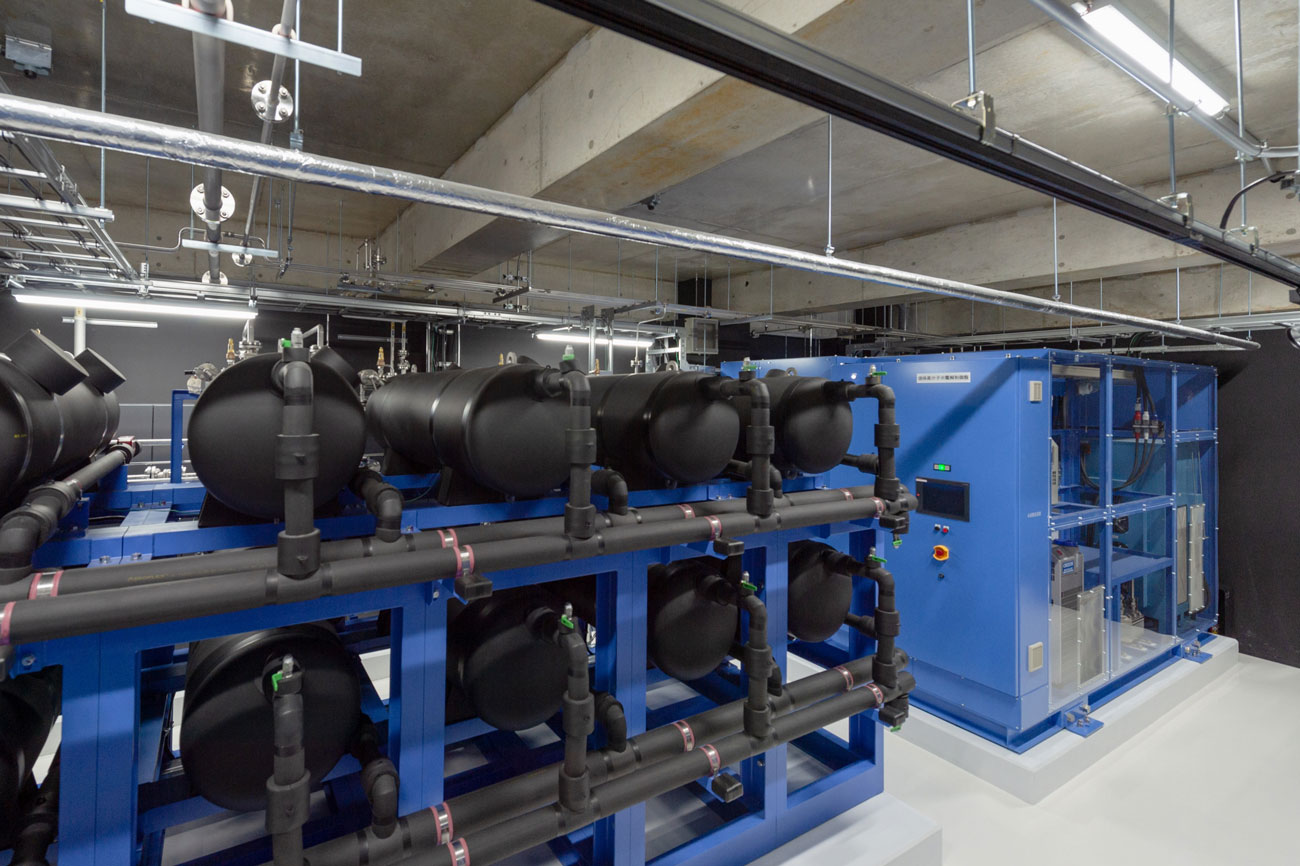
As part of our efforts to realize a zero-carbon society, we have developed and commercialized the Hydro Q-BiC in collaboration with the National Institute of Advanced Industrial Science and Technology (AIST).
This system produces and stores hydrogen with the surplus electricity from solar power generation during times of low electricity demand and generates electricity with a reaction between hydrogen and oxygen when the building’s electricity demand increases, thereby making it possible to conserve energy without wasting any electricity.
- Technical solutions: Hydro Q-BiC Hydrogen Energy Utilization System for Buildings. (only in Japanese)
- News release: Verifying the CO2 reduction effect of the Hydro Q-BiC. (only in Japanese)
- The key to expanding renewable energy: storing electricity with hydrogen — Hydro Q-BiC.(Only in Japanese)
(iii) Biochar Concrete
By mixing biochar, produced by carbonizing woody biomass, into concrete, we have developed and commercialized an environmentally conscious concrete called Biochar Concrete SUSMICS-C that stores carbon within concrete structures. This technology uses carbonized wood that absorbed CO2 from the atmosphere during its growth and fixes it inside the concrete. By also using low-carbon cement in which a portion of cement—whose production emits large amounts of CO2—is replaced with blast furnace slag, it is possible to achieve carbon-negative performance in which the amount of CO2 fixed exceeds the amount emitted.
News release: Storing carbon in concrete structures using biochar.(Only in Japanese)
(iv) Promoting CO2 Absorption with Impregnant Applied to Concrete Surface
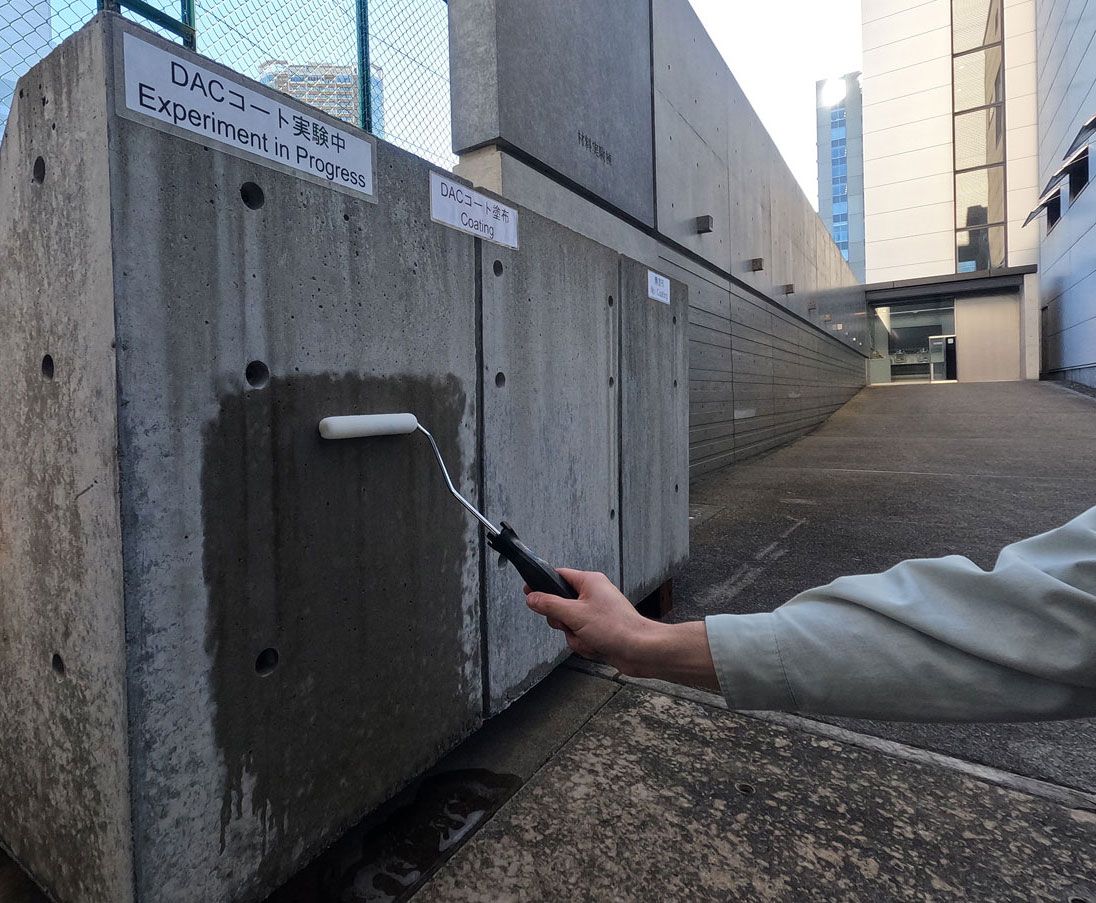
We jointly developed Direct Air Capture (DAC) Coating, a technology that promotes CO2 absorption from the air using existing concrete structures, with Hokkaido University. With the application of an impregnant to its surface, the concrete structure absorbs and fixes at least 1.5 times more CO2 from the air. Moreover, because it is also anti-corrosive, it reduces rebar corrosion caused by concrete carbonation, helping to extend the life of reinforced concrete, thereby contributing to the realization of a carbon-free society.
We will contribute to the realization of a carbon-free society throughout the building life cycle, from material procurement to construction and building operation.
(v) Negative Emission Technologies
“Development of an innovative large-scale CO2 resource utilization system centered on electrochemical processes” has been selected for NEDO’s Moonshot Research and Development Program. Under this project, an integrated system will be developed that captures both dilute CO2 released into the atmosphere and CO2 before it is released, and uses renewable energy as the driving force to electrochemically concentrate and reduce the CO2 to produce useful chemical raw materials, thereby establishing a foundation for carbon recycling.
(vi) Construction of Offshore Wind Farms
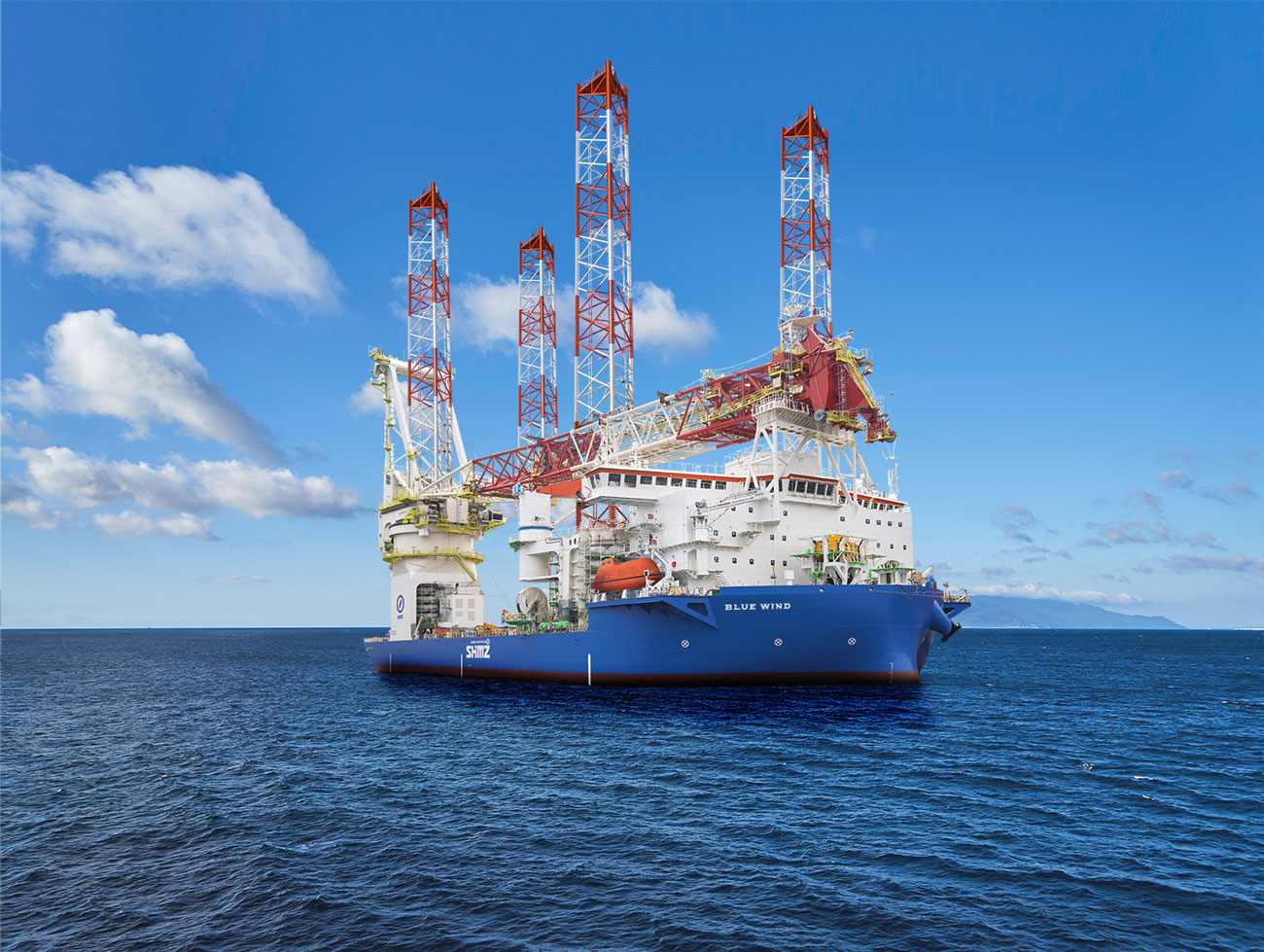
Among sources of renewable energy, offshore wind firm has tremendous potential owing to the scale and stability of its power generating capacity. We have one of the world’s largest self-propelled Self-Elevating Platform (SEP) vessels capable of being used in the construction of large-scale 14-15 MW wind turbines so that we can contribute to the expansion of offshore wind firm.
Our aim is to obtain the top offshore wind firm facility construction market share in the industry by having SEP vessels capable of use in reliable and efficient construction of large wind turbines.
- News release: SEP vessel “BLUE WIND” to Support the Offshore Wind Farm Market in Taiwan (only in Japanese.)
- News release: BLUE WIND Assembles Fourteen 8 MW Wind Turbines at Ishikari Bay New Port (only in Japanese.)
- Special site: One of the world’s largest self-propelled SEP vessels supporting the future of renewable energy (only in Japanese.)
(vii) Renewable Energy Business
We are also actively working on the business of generating renewable energy, including wind, solar, biomass, hydraulic, and geothermal power and the retail electricity business.
Since 2020, we have been operating a community-based biomass power generation facility in Tomi City, Nagano.
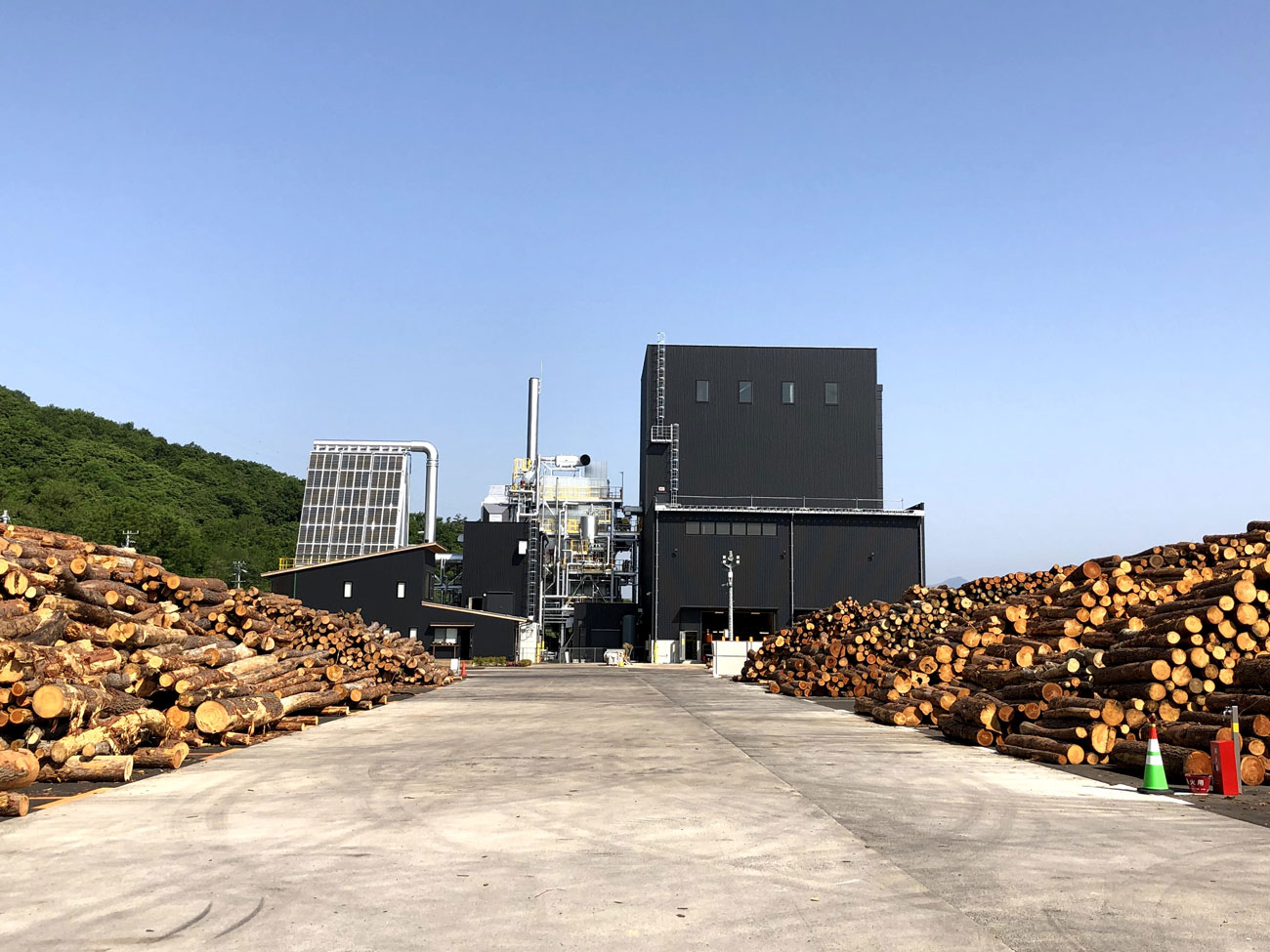
- Business topics: Contributing to local forestry and prevention of global warming with community-based 2 MW class biomass power generation
- Special site: Business of generating renewable energy promoted by Shimizu (only in Japanese.)
Wholly owned subsidiary Smart Eco Energy, which is engaged in the retail electricity business, also provides decarbonization solutions such as sales of renewable energy certificates (RECs) and is promoting the shift to renewable energy in the electricity used for construction through the use of RECs at our construction sites.
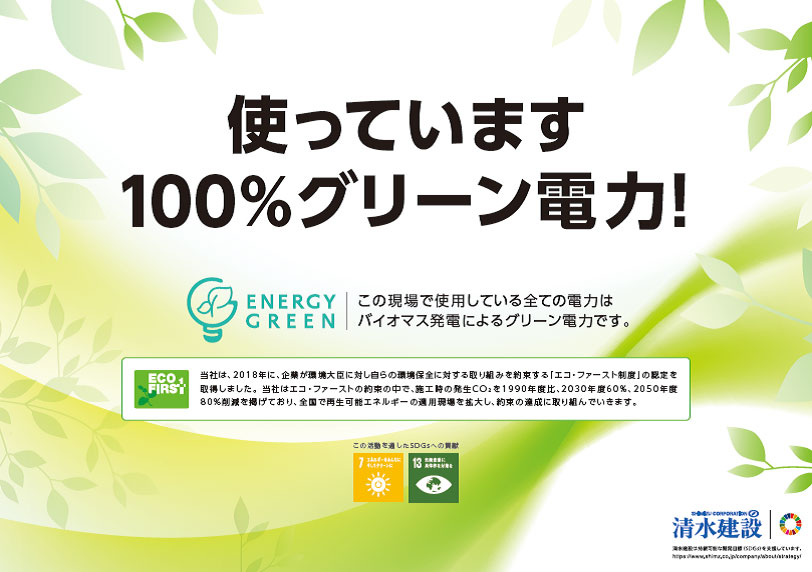
- News release: Shimizu Introduces Electricity Derived from Renewable Energy Sources Through Use of Off-site Corporate PPAs (only in Japanese.)
- Smart Eco Energy Co., Ltd. (only in Japanese.)
(viii) Environmental Future City Concept GREEN FLOAT
A concept for a floating artificial island in the Pacific Ocean near the equator. The project proposes a carbon-negative city that achieves food self-sufficiency, circular use of waste, and 100% renewable energy use, while also incorporating CO2 capture and ocean sequestration technologies.
Memberships and Collaborations
| Category | Organization | Description of activities | Logo |
|---|---|---|---|
| Climate change, decarbonaization | Task Force on Climate-related Financial Disclosures (TCFD) Consortium | We consider the impact of climate change on our business as an important management issue and believe it is essential to disclose relevant information from the perspective of ESG management. In addition to declaring our support for the TCFD recommendations, we participate in the TCFD Consortium to disclose climate-related information in accordance with the recommendations. |
 |
| Science Based Targets initiative (SBTi) | As part of our efforts to realize a zero-carbon society, we have established medium- and long-term reduction targets based on SBT※, using total CO2 emissions as an indicator to assess and manage the impact of climate-related issues on our business. Shimizu Group Medium- to Long-term Targets for Reduction Based on SBT |
 |
|
| GX League(GX: green transformation) | The GX League is a forum where companies actively engaged in green transformation (GX), together with government, academia, and financial institutions, engage in discussions for the transformation of the economy, society, and the entire system, as well as the implementation of GX for the creation of new markets. For our part, we aim to contribute to the realization of carbon neutrality by 2050 by participating in the GX League and collaborating with participating companies and organizations. |  |
|
| Climate change, decarbonization | JCLP | Recognizing that the industrial sector should have a strong sense of urgency with respect to realizing a sustainable zero-carbon society and be proactive, this unique Japanese corporate group was launched in 2009. By taking the lead in the transition to a zero-carbon society, we aim to become a company that is sought after by society. We participate in COP reporting sessions and other events hosted by JCLP. |  |
| CARBON RECYCLE FUND INSTITUTE | We aim to simultaneously address the issues of global warming and improving energy access by promoting research grants and public relations activities focused on capturing CO2 as a resource and promoting recycling, thereby creating innovation. In collaboration with CRF, we participate in several exhibitions, international conferences, and other events. |  |
|
| Consortium for Promoting the Use of Electric Vehicles | Established in 2020, this consortium aims to address challenges related to the adoption of electric vehicles and contribute to the realization of a decarbonized society. Shimizu supports its objectives and became a member in March 2021, the earliest among construction companies. We promote the adoption of electric vehicles not only through the use of our own company vehicles but also by providing EV charging infrastructure in buildings delivered to clients. |