Policy and Commitment
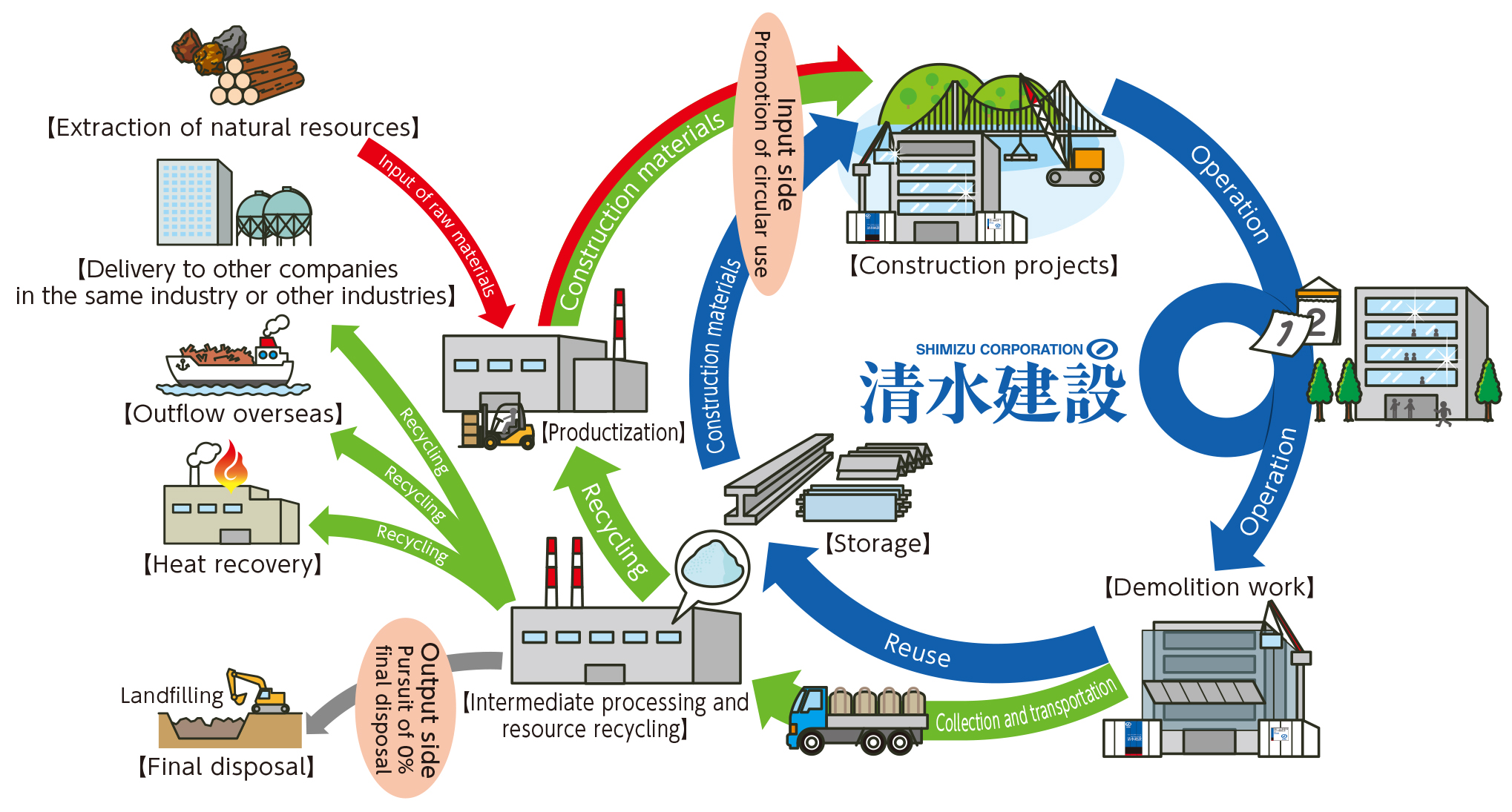
We have adopted business activities with low environmental impact as our Environmental Basic Policy. In our construction projects, we have positioned the prevention of environmental pollution as a key management priority and have promoted the 4R activities (refuse, reduce, reuse, and recycle) to conserve resources and reduce and recycle by-products.
In the material circulation roadmap published in FY2025, we set, in addition to the output-side target of achieving a final disposal rate of 0% for construction by-products by 2050, a new management target: the circular inflow rate. We established goals of 25% or higher by 2030 and 50% or higher by 2050.
As specific measures to achieve this, in addition to our existing 4R activities, we will promote the procurement of construction materials with recycled content in mind, as well as design and construction that anticipate future reuse and recycling. Over the longer term, through business development focused on resource productivity, including creating greater value with fewer materials, including construction practices that minimize the use of natural resources, we aim to help realize a sustainable society while generating new business value.
Management System
Management
To realize SHIMZ Beyond Zero 2050, we aim not only to eliminate the negative environmental impacts of our own operations by 2050, but also to actively create positive environmental value for our clients and society (Beyond Zero). To achieve zero negative impact, we have established two strategies: one focused on construction and demolition, and another focused on operation and value evaluation.
In construction and demolition, in addition to promoting 4R activities, we will implement upcycling and advance technologies that recycle waste into resources so it can be reused as construction materials. In operation and value evaluation, we assess the value of buildings and materials to encourage their continued use and extend building lifespans.
Toward Beyond Zero, under Design and Procurement we will create construction projects that minimize the use of natural resources while expanding supply chains for remanufacturing recycled components.
Under Forest Recycling, we contribute to the circular use of forest resources through the use of timber and tree-planting initiatives.
System
We review fundamental policies and initiatives related to environmental issues through the Sustainability Committee, chaired by our President. The committee reviews evaluation results related to material circulation and tracks progress toward our material circulation targets. The results are reported to the Board of Directors, which provides oversight.
Key decisions on environmental issues within the Shimizu Group are communicated to business divisions (including branch offices) and Group companies through the Environmental Management Meeting and the Group Company Environmental Management Meeting. Through this process, we maintain an environmental governance framework that also involves major suppliers.
For details of this structure, please refer to Governance Structure for Resource Recycling–Related Issues in the Shimizu Group.
Targets and Performance
Quantifying the Circular Inflow Rate
Promoting material circulation (the circular economy) makes a significant contribution to reducing environmental impact by ensuring the effective use of resources.
We calculate the circular inflow rate (the proportion of circulated materials within the materials brought into our construction projects) based on the government’s Fundamental Plan for Establishing a Sound Material-Cycle Society. We have set medium- to long-term targets of at least 25% by 2030 and at least 50% by 2050.
We will continue to measure this rate regularly in our construction projects and work to improve it across all processes, including design, procurement, and construction, thereby actively contributing to the promotion of material circulation.
Target Values for the Circular Inflow Rate
| 2030 | 2050 | |
|---|---|---|
| Construction work (building and civil engineering) | 25% or more | 50% or more |
Definition of the Circular Inflow Rate
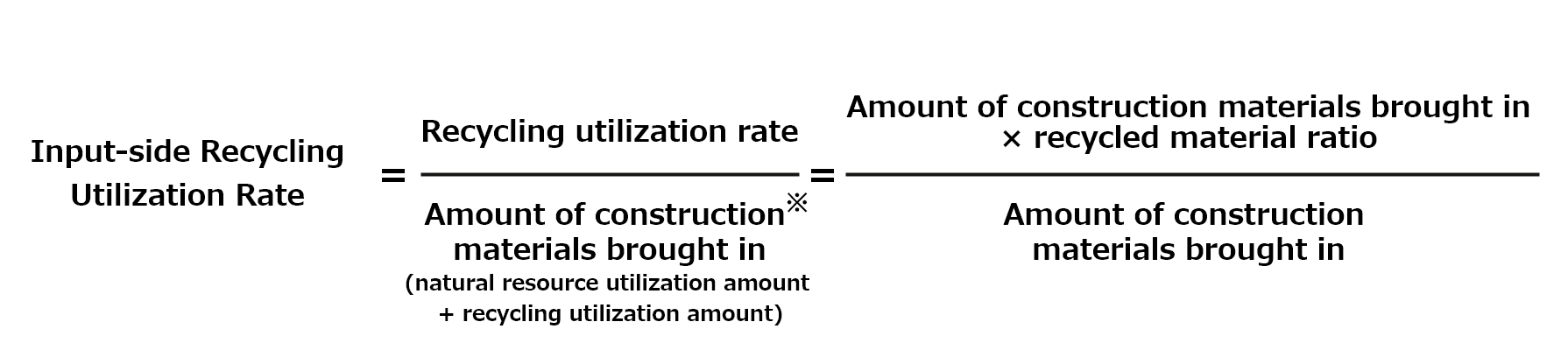
Calculation of the Circular Inflow Rate
- FY2024 circular inflow rate
21%
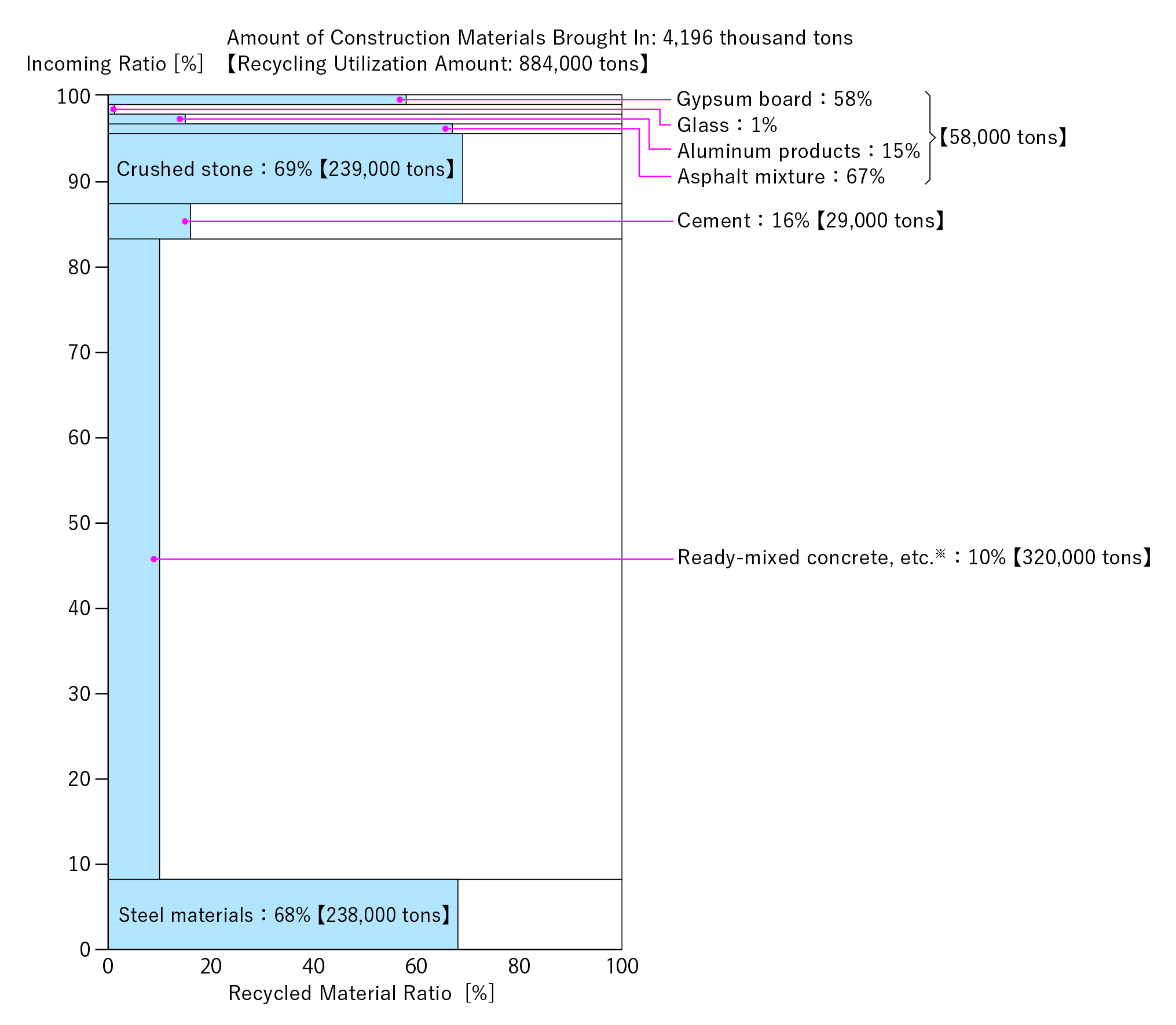
Cement used for ready-mixed concrete is recorded under “ready-mixed concrete, etc.”
Cement used for ground improvement materials and on-site mixed concrete is recorded under “cement."
Total Emissions and Final Disposal Rate
We aggregate annual construction waste data from our worksites using Shin-Kan-Tasu, our construction by-products data management system (Only in Japanese). We manage performance against our KPI of reducing the final disposal rate.
To ensure proper waste disposal and to align with the government’s digitization policy, we are promoting the use of electronic manifests. The adoption rate reached 97% in FY2024.
The FY2024 results are as follows.
- Total volume generated:
1.36million tons (26% YoY)
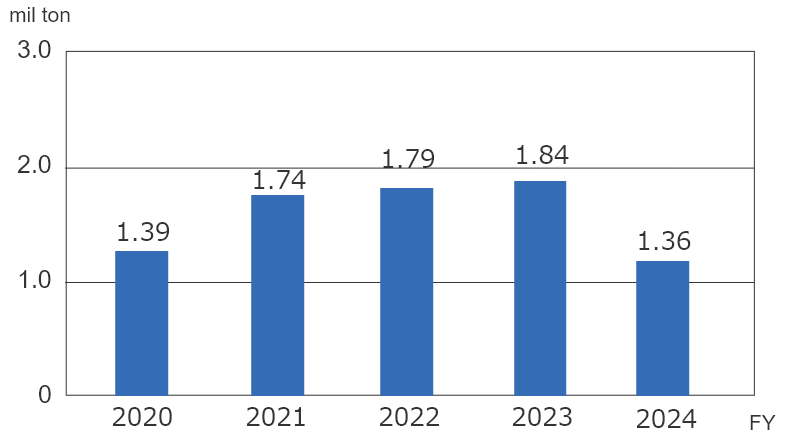
- Volume generated (excluding sludge):
0.93million tons (-24% YoY) - Final disposal rate:
2.5% [Target: 3.5% or less]
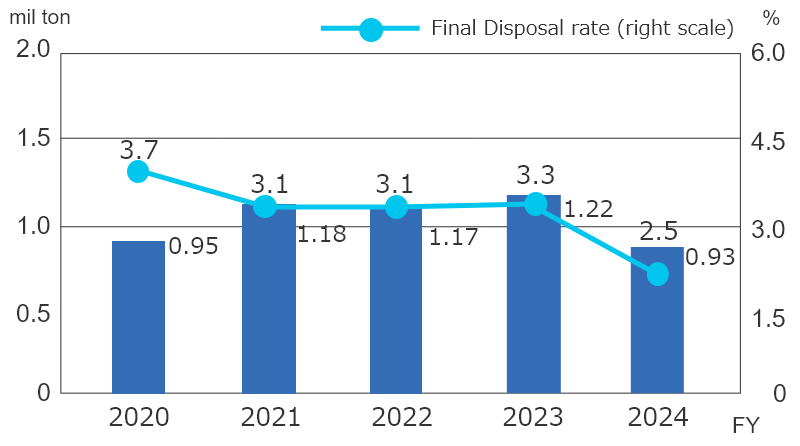
Our performance and targets related to resource recycling are summarized in the table below.
| FY2022 results |
FY2023 results |
FY2024 results |
FY2030 target value |
FY2050 target value |
|
|---|---|---|---|---|---|
| Final disposal rate of construction by-products | 3.1 % | 3.3 % | 2.5 % | Less than 3 % | 0 % |
| Final disposal rate of waste plastics | 20.2 % | 20.9 % | 16.5 % | 15 % or less | 0 % |
| Circular inflow rate | - | - | 21 % | Over 25 % | Over 50 % |
Financial Evaluation of Pollution, Waste, and Raw Material Use
| Category | Cost (million yen) | |
|---|---|---|
| Pollution | Pollution prevention measures at construction sites I-1 | 10,865 |
| Resource recycling | Proper treatment measures for construction by-products I-3 | 21,180 |
| Total | 32,045 | |
R&D Investment for Pollution Reduction
| Category | Cost (million yen) |
|---|---|
| R&D expenses for pollution control, waste reduction and recycling measures, raw material reduction, and the use of recycled materials | 1,040 |
Initiatives
4R Activities at Worksites
We plan and pursue 4R activities and are working to use fewer resources, reduce the volume of by-products, and recycle materials. We also employ a system for predicting the volume of construction by-products that will be generated, and formulating and implementing a plan for effective reduction.
In addition to environmental risk management training for construction managers and chief engineers who serve as the overall supervisors of construction sites, we also provide e-learning on the proper treatment of construction by-products to site personnel. Through these efforts, we promote not only the proper treatment of construction by-products at construction sites but also further reductions in waste generation and increased recycling.
These initiatives help reduce our environmental impact.
- Refuse Going package-less, precutting at the factory, and unitization
- Reduce Using alternate formwork and Precast concrete (PCa) adoption
- Reuse Reusing repetitive formwork (eco formwork) and improved soil
- Recycle Bringing materials to a recycling center so they can be reused, recycling by manufacturers (regional authorization, etc.)
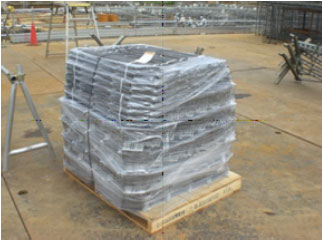
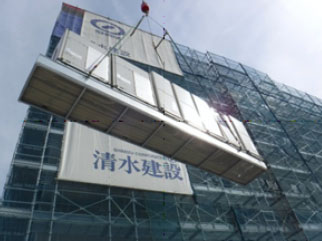
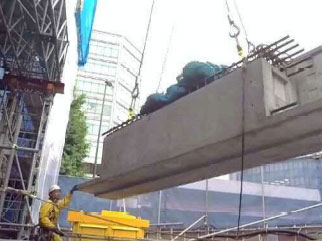
Easily Removable Exhibition Hall for 100% Recycling
Construction of a Temporary Exhibition Hall on the East Side of Tokyo Big Sight (Tokyo Branch)
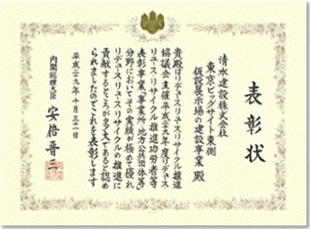
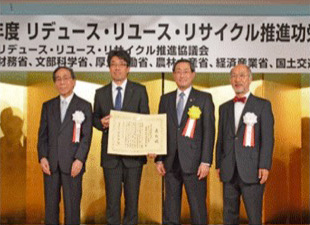
Shimizu diligently implemented 4R activities from the design and construction stage by preemptively considering the dismantling and removing of the building. In the construction stage, we applied various methods such as the steel pipe pile rotation and press fit method or our patented pile head ring socket construction method. We used precast concrete for the framework and unitized equipment during the construction stage, simplified packaging, and sorted waste, thereby substantially reducing generation of by-products. We also used recyclable materials for the exterior components and materials. We planned and implemented a 4D process using BIM, and employed environmentally friendly methods in the dismantling stage as well. Shimizu received a contributor's award from the Prime Minister for practicing the 3Rs (reduce, reuse, and recycle) in fiscal 2017 in this project.
Material Recycling of Waste Plastics
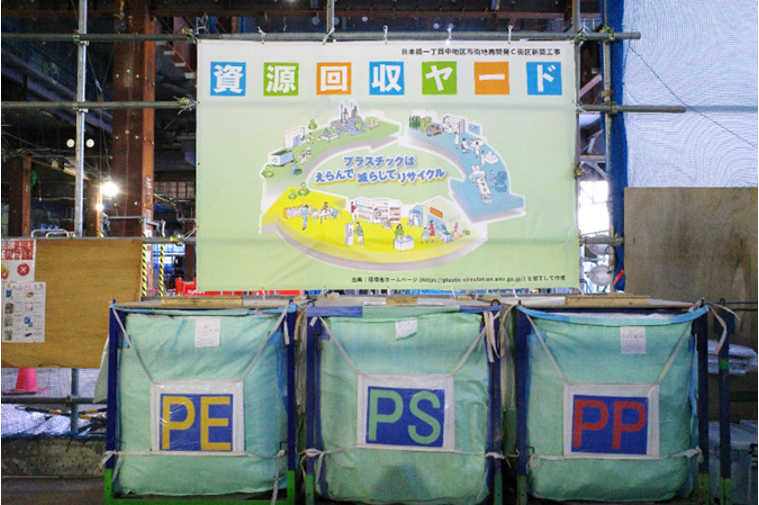
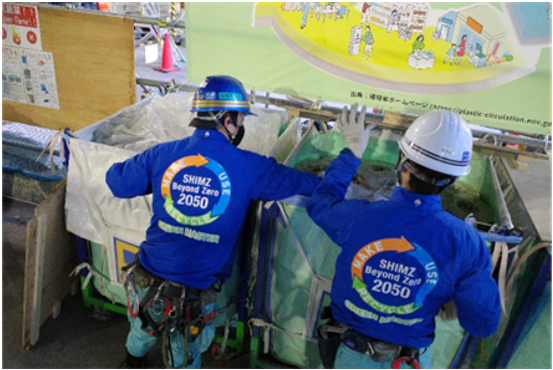
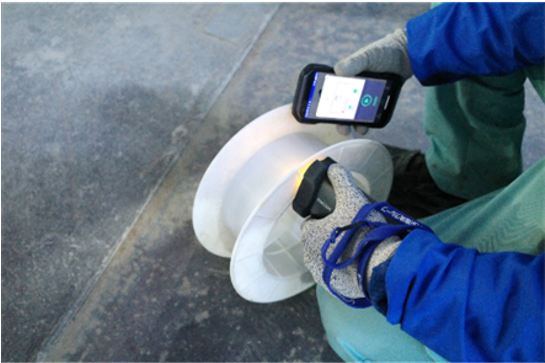
We promote the material recycling of plastic waste generated at construction sites. As part of this initiative, we have established a system that uses plastic sensors to accurately sort a wide variety of plastics and sell them as valuable recyclable materials. At construction sites, waste storage areas are designated as material recovery yards, and a dedicated worker responsible for managing all waste (a Green Master) is assigned. At the yard, the worker uses a handheld plastic sensor to identify the material type of waste plastics brought in and, based on factors such as attached substances and the level of contamination, selects items suitable for sale as valuable materials.
We have also launched “Site to Site” material recycling, in which waste plastics generated at a given site are reused at the same site as raw materials for new building materials. Going forward, we will expand our efforts to promote the material recycling of waste plastics not only in Tokyo but also in regional areas.
News Release
- Recycling diverse waste plastics generated at construction sites
- Reusing waste plastics generated at construction sites as new building materials
- Manufacturing structural components for rainwater storage tanks from waste plastics generated at construction sites
Recycling Flat Glass from High-Rise Buildings
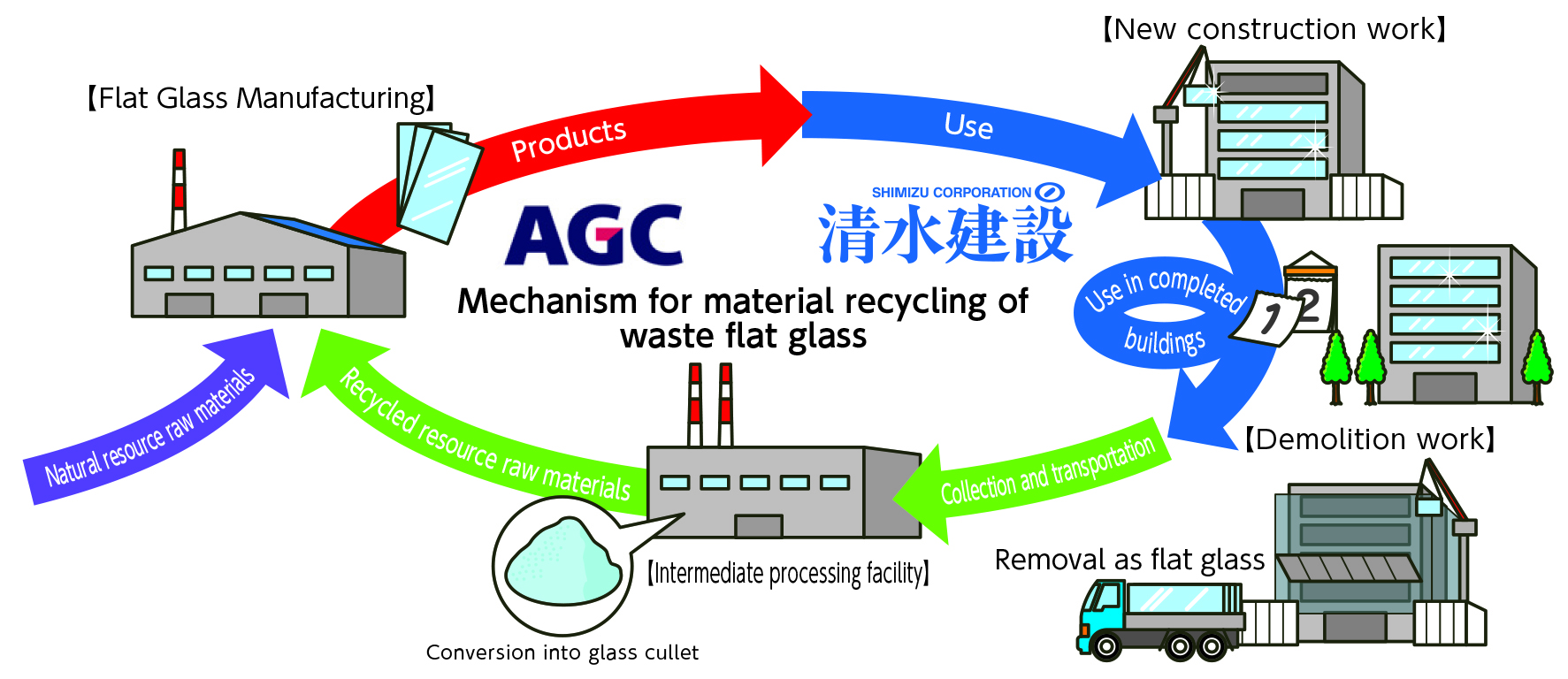
Waste flat glass generated during the demolition of super high-rise buildings has historically been difficult to recycle, resulting in most of it being sent to landfill. At one of our construction sites, we recovered about 90% of the roughly 340 tons of exterior glass removed from a demolished building, keeping it in flat form and recycling it as material for new glass products.
The recovered glass is sorted and purified at a recycling plant to remove impurities and then processed into cullet. The cullet is supplied to the glass manufacturing plant of AGC Inc., where, after quality testing, it is used as raw material for new flat glass.
We will continue to promote the material recycling of waste flat glass, particularly in demolition projects for super high-rise building
News Release
Fully Recyclable Concrete
Since 2020, we have launched a collaborative project aimed at the practical application of a new type of concrete that captures and permanently stores CO₂ from the atmosphere.
Use of Life Cycle Assessment
Shimizu has developed CO2 emissions forecasting systems that utilize LCA methodology: the Shimz Carbon Assessment Tool for buildings and Civil-CO2 for civil engineering. These systems are used in planning and other project stages. The forecast results are output as analytical reports, including CO2 emissions by scope. At present, the systems focus only on CO2 emissions and do not include functions to forecast or manage indicators such as the input-side recycling utilization rate or the final disposal rate. These indicators are therefore handled individually for each project. Looking ahead, we are studying ways to use LCA methodology to conduct comprehensive evaluations that include decarbonization, resource recycling, and nature-positive initiatives, taking into account both synergies and trade-offs, and to apply these evaluations to proposals for buildings and infrastructure.
Other Initiatives
Other initiatives include the use of paper-based materials made from recycled paper and pulp as temporary materials at civil engineering sites (environmentally friendly temporary materials KAMIWAZA (Only in Japanese)), the use of timber in buildings (Only in Japanese), and forest cultivation to produce timber used in our own projects (Shimizu Meguri no Mori (Only in Japanese)).
Memberships and Collaborations
| Category | Organization | Description of activities | Logo |
|---|---|---|---|
| Resource circulation | Japan Federation of Construction Contractors (Nikkenren) | We participate in the Environmental Committee’s Construction By-products Subcommittee and work with the industry as a whole to reduce waste and environmental pollution, while also submitting proposals when necessary. |  |
| Circular Partners (CPs) |
Based on the Growth-Oriented Resource Autonomous Economy Strategy formulated by the Ministry of Economy, Trade and Industry in March 2023, Shimizu participates in Circular Partners (CPs), a partnership established by the Ministry to promote collaboration among industry, government, and academia. From the outset, we have participated in the Construction Domain Working Group and the CE Information Distribution Platform Construction Working Group. Within these groups, we engage in ongoing discussions with general contractors and supply chain companies that are also members. |
 |
|
| Japan Partnership for Circular Economy (J4CE) |
Shimizu also participates in the Japan Partnership for Circular Economy (J4CE), established under the leadership of the Ministry of the Environment to strengthen public-private collaboration, deepen understanding of the circular economy, and promote related initiatives among a broad range of stakeholders, including domestic companies. Through this framework, we disclose our initiatives and promote information sharing with participating companies. |
 |
Encouraging Manufacturer Recycling Using a Region-Wide Certification System
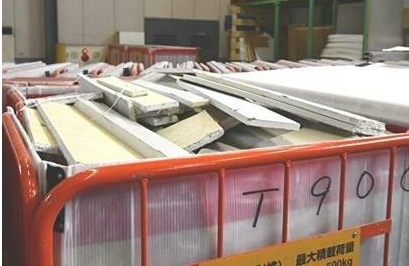
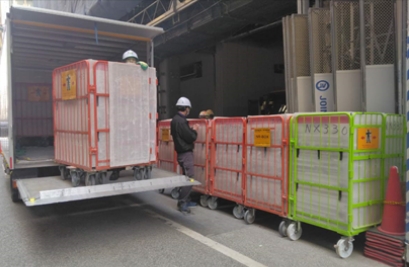
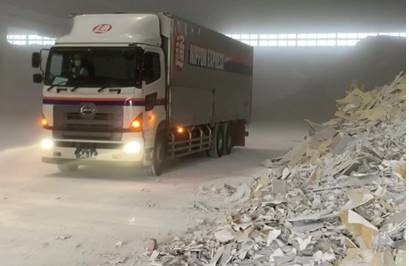
We are promoting the use of the Wide-area Certification System (manufacturer recycling). We collect construction material waste generated at our worksites—such as gypsum board and urethane materials, including product offcuts—and ensure proper processing through recycling at manufacturers certified by the Minister of the Environment.
In addition to gypsum board, which had a high utilization rate under the system, beginning in FY2024, we also collect rock wool sound-absorbing panels, glass wool, and other materials at transfer points using NRBOX, a dedicated collection container provided by Nippon Express Co., Ltd., and ship them directly to manufacturers.
We will expand this initiative to additional worksites and collaborate with other companies to implement circular collection, thereby contributing to the promotion of material circulation across the construction industry.