Business Development and Challenges
Higashi:Next, please share your thoughts on the future direction
and challenges for our company as we advance our sustainability
management.
We are currently pursuing a range of forward-looking initiatives,
including the development of our environmental vision and the
advancement of hydrogen-related technologies. With that in mind,
we would like to hear your thoughts on what will be essential to
ensure sustainable business development moving forward, as
well as any current challenges or areas in need of improvement.
President:To start, I believe it is essential to steadily implement initiatives in line with the policies we have already announced, including our environmental vision. Hydrogen-related technologies have yet to reach widespread adoption, and overcoming a range of technical challenges remains necessary. In our offshore wind power business, which utilizes our self-propelled SEP vessel, I believe a key challenge lies in establishing effective mechanisms for accurately identifying the needs of clients and society as we work toward future business expansion.
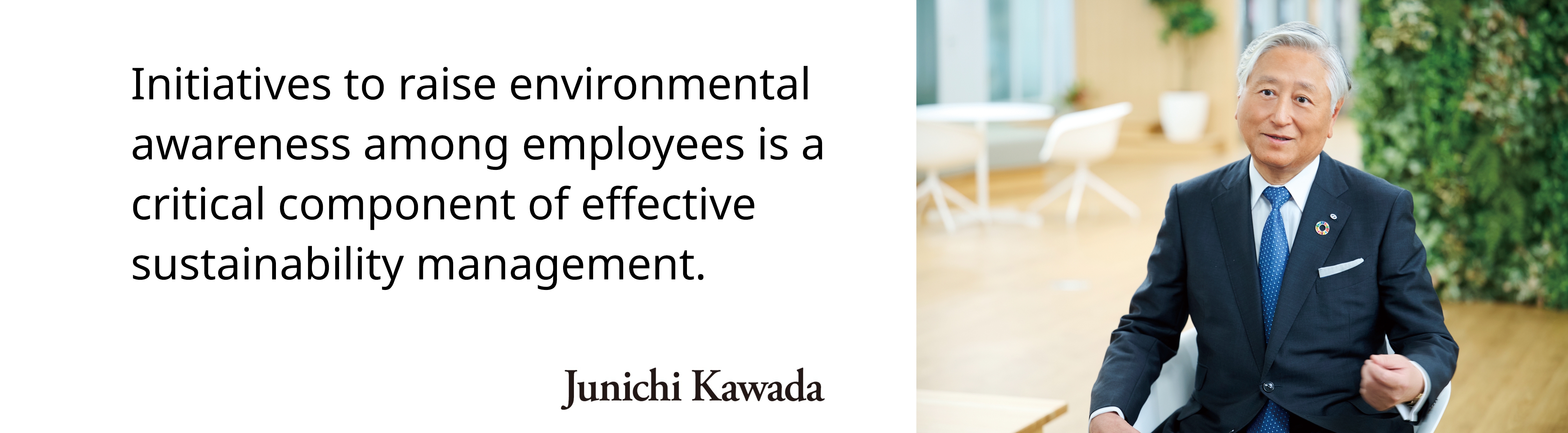
Kawada:One of the reasons decarbonization efforts have been
slow to gain traction is the associated rise in costs. Energy providers
are striving to lower costs to encourage wider adoption,
but for example, renewable diesel (biodiesel) currently costs
three to four times more than conventional diesel fuel.
Since April of this year, the company has begun including the
cost of introducing green electricity, one of the additional
expenses at its construction sites, as part of its construction
costs. It also plans to begin treating biodiesel costs as part of
construction costs in the near future, with the aim of raising
environmental awareness among employees. Concrete initiatives
are already being rolled out step by step. I believe that thoroughly
planning and executing initiatives on the ground is a critical component
of effective sustainability management.
Iwamoto:Personally, I see overseas expansion as essential for future growth, but earning genuine recognition from local communities is something that will likely take decades. That said, I believe such long-term commitment is essential if the company is to pursue overseas expansion and ensure continued sustainable growth.
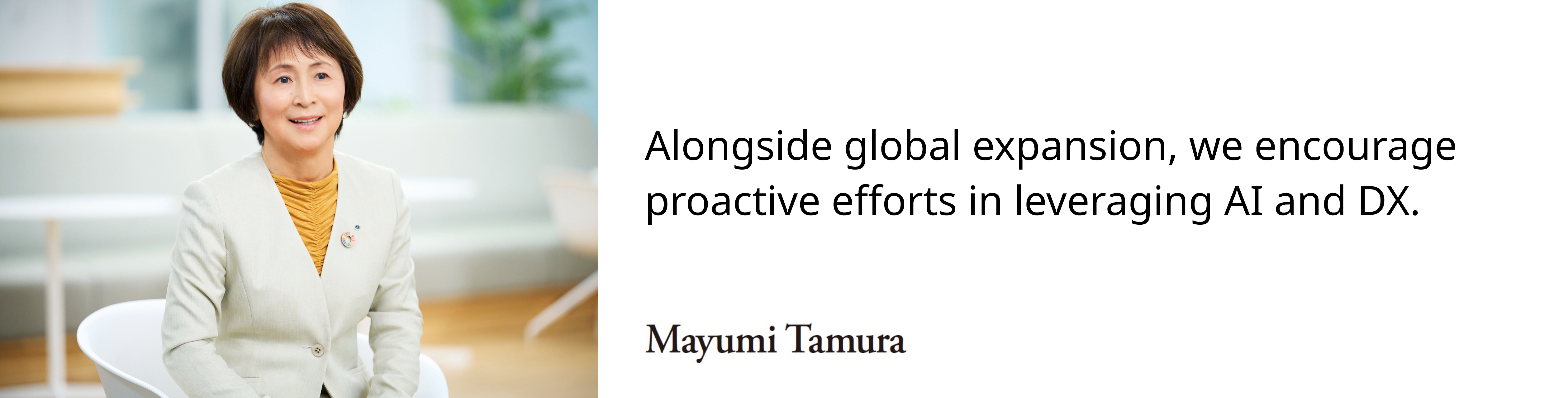
Tamura:I agree. Shimizu needs to actively lay the groundwork for expanding its business overseas. While domestic construction demand remains strong for now, it is expected to decline in the future due to a shrinking population, which is why I believe the company should begin taking action now.
Jozuka:I agree, as relying solely on the domestic market carries
risks. The company has strong technological capabilities,
and I believe it can put that strength to use as it expands into
international markets. At the same time, I believe it is vital for the
company as a whole to embrace a global mindset where
individuals from diverse departments, expertise, and experiences
can share ideas and contribute actively, both in Japan and
abroad, regardless of age, gender, or nationality.
Shimizu is also taking on the challenge of creating new businesses,
and it is the employees’ ideas that are the driving force
behind those efforts. To harness those ideas, I believe it remains
essential to foster a workplace where younger employees feel
comfortable speaking up. Since the organization tends to operate
in silos, it is important that the company continues fostering a
culture of open communication across departments where
everyone feels free to share their ideas.
Iwamoto:Breaking down organizational barriers is no easy task, but I believe it is important that the company begins approaching its work with a company-wide perspective.
President:Yes. We will keep that firmly in mind and approach it with intention.
Tamura:I also hope you will approach the domestic labor shortage with a greater sense of urgency by actively pursuing technological innovation, leveraging AI, and driving DX initiatives to achieve operational automation. On top of that, I believe you should strengthen your public relations efforts to further raise the company’s visibility in society.
President:I agree. Given our serious-minded corporate culture, we sometimes hesitate to share our efforts externally, thinking they may not warrant public attention. But I believe we should actively promote the work we are doing outside the company. I also believe that clearly communicating the outcomes of initiatives driven by the Choukensetsu mindset—both internally and externally—will help further accelerate innovation across the company. We are committed to continuously evolving as we work toward creating new value.