Historical Structure
Brick Gate Standing Since the Taisho Era
Relocated 112 Meters by Building Relocation Work
Relocation and Restoration of the Former Nakano Prison Main Gate
In Nakano City, Tokyo, work is underway to relocate and restore the Former Nakano Prison Main Gate (designated cultural property name: Former Toyotama Prison Front Gate), which has been recognized as a cultural property by the city. In late July 2025, the entire structure was relocated intact using a traditional building relocation method, without any demolition.
A Brick Gate That Survived the Great Kanto Earthquake
The Former Toyotama Prison, known for housing prominent thinkers such as novelist Takiji Kobayashi, featured this gate as its front entrance. It was designed in 1915 by Keiji Goto, one of the leading architects of the Taisho era. The gate is Goto’s only surviving work and a valuable brick structure that withstood the Great Kanto Earthquake.
When the prison was closed in 1983, all buildings except the main gate were demolished. The gate alone continued to be carefully maintained and used as part of a Ministry of Justice training facility until 2017. In 2021, Nakano City acquired the entire site for the construction of a new elementary school, and the gate was designated as a tangible cultural property that same year. After careful consideration, the city decided to preserve and utilize the gate by relocating it approximately 112 meters west of its original location through a building relocation process.
Unexpected Manual Excavation Work
The main steps of the construction began with reinforcing the foundation with reinforced concrete to ensure it could withstand the building relocation. To prevent any deformation of the structure, the interior was also reinforced with steel horizontal braces. The gate was then jacked up to the height of its new site before being moved in its entirety. After seismic isolation devices were installed at the new location, restoration work was carried out to complete the project.
Following the foundation reinforcement, 48 temporary steel pipe piles were installed beneath the main gate to support it during the jacking-up process. However, the team encountered an unexpected challenge at this stage. Katsuhiko Wada, Construction Supervisor of the Shrine and Housing Construction Department at the Tokyo Branch, recalls:
“The ground was too hard for the excavation machinery to operate, so we had to switch to manual digging at short notice. Each spot required one to two days to dig by hand, plus an additional day for pile driving, and this process was repeated for all 48 piles. It was extremely demanding work, but our partner companies gave it their all.”
Wada expressed his deep gratitude to the colleagues and partners who came together to overcome these unforeseen difficulties.
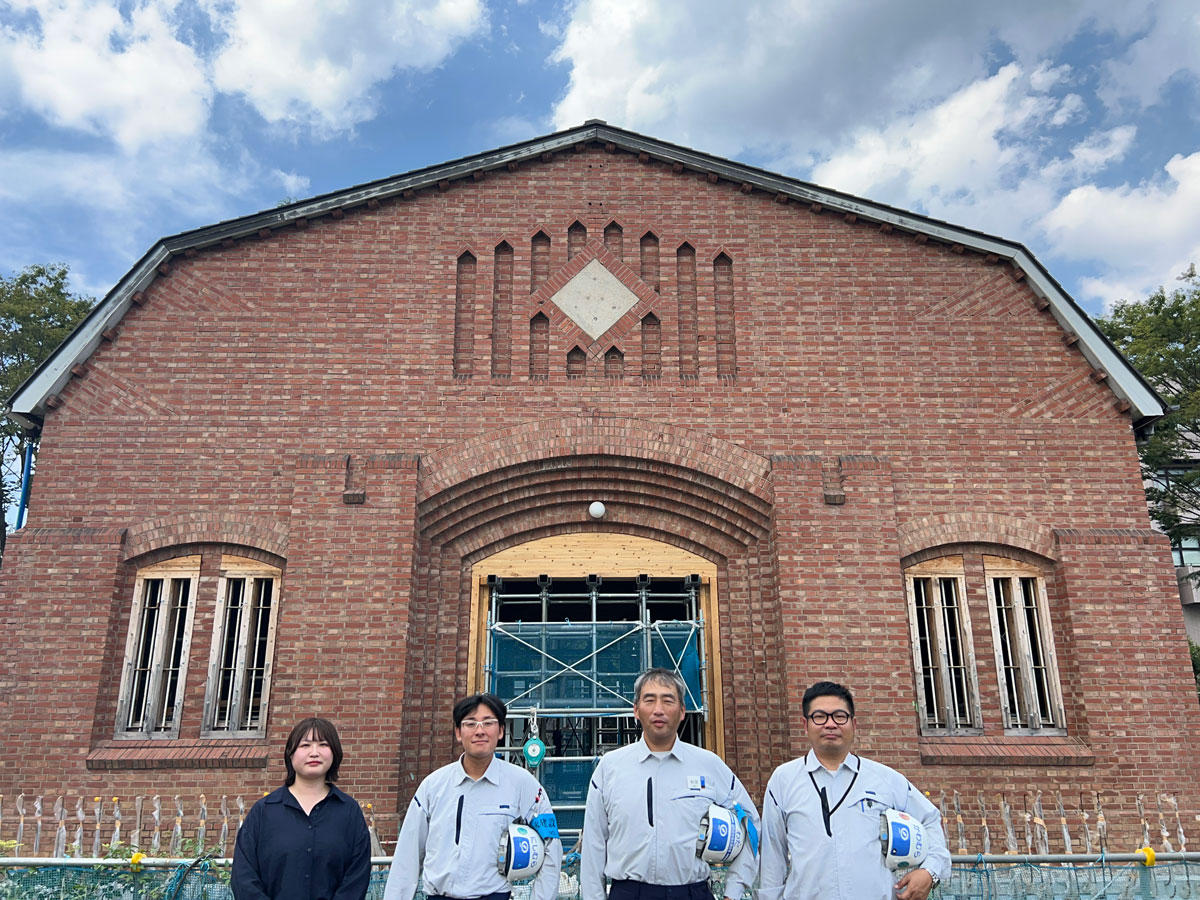
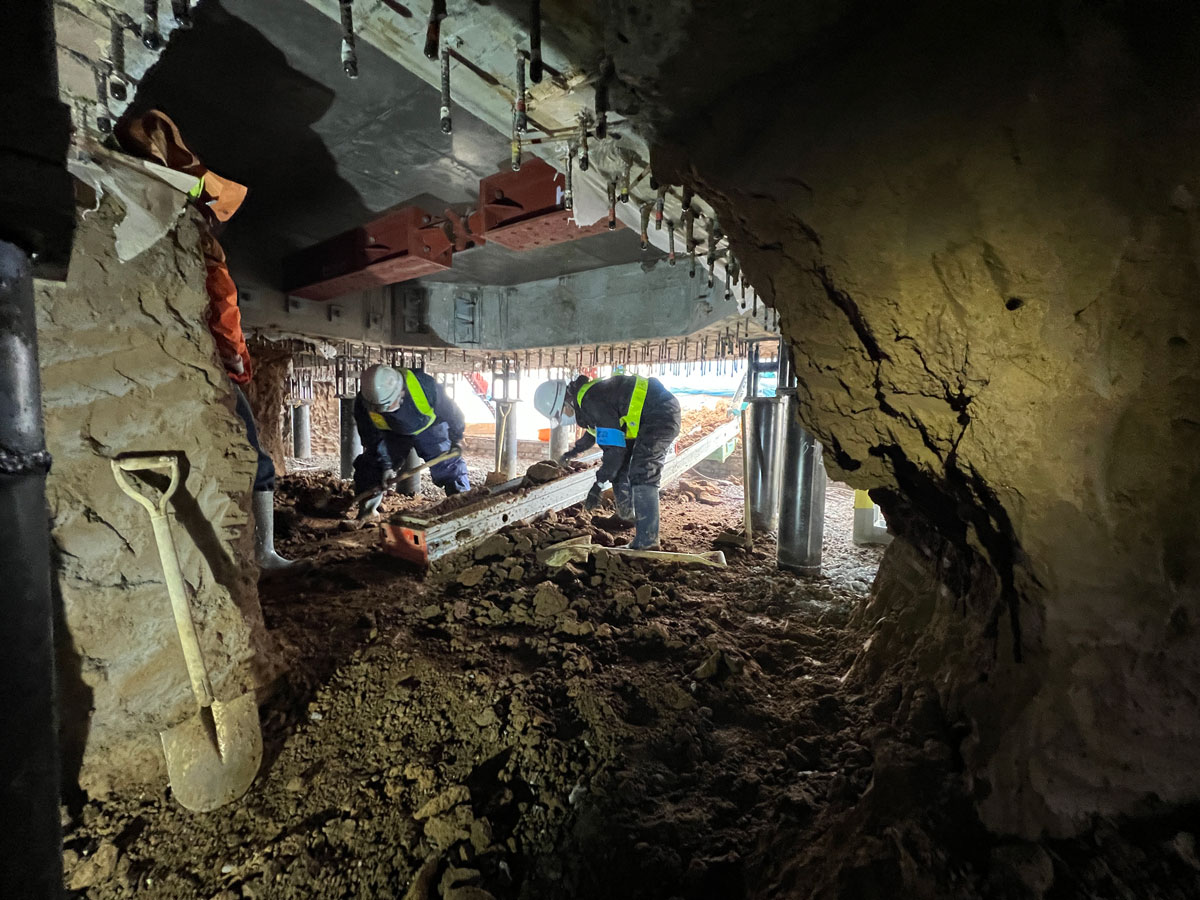
While reinforcing the main gate, the team also had to prepare both the relocation route and the destination site to move the gate, which weighs approximately 672 tons. After excavating about 4,000 cubic meters of soil, a 30-centimeter-thick concrete foundation slab was built in preparation for the move. Following roughly a year and a half of construction, the project was finally ready for the relocation work to begin.
A Rare Building Relocation Spanning Over 100 Meters
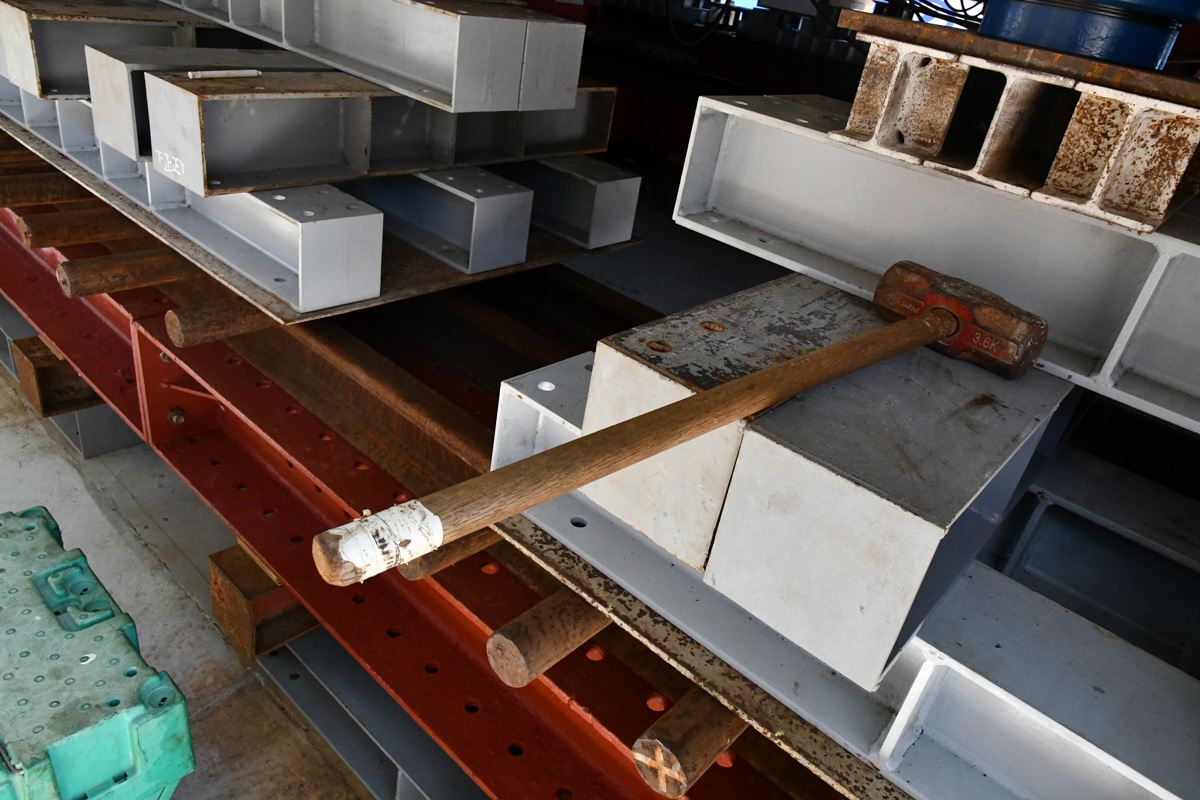
For the relocation, a moving system consisting of H-beams, rails, and steel rollers was installed beneath the jacked-up main gate. Using hydraulic jacks, the gate was pushed about one meter at a time, with each push taking roughly 30 minutes. This process was repeated 15 to 17 times per day, moving the gate approximately 112 meters to its new site over the course of seven days.
The relocation took place between late July and early August 2025. During the operation, Nakano City held a public viewing, allowing visitors to observe the delicate work up close.
“It is extremely rare to relocate a brick structure more than 100 meters,” explains Wada. “The main gate has no reinforcing bars, so even the slightest vibration or tilt could cause cracking or collapse. Every step requires careful precision.” His words highlight the exceptional technical challenges faced in this project.
Throughout the relocation, the team continuously monitored the gate to ensure it remained within strict control parameters, maintaining a tilt of less than 1/3333 and a horizontal deviation within ±10 millimeters. When the direction began to drift, the workers made precise course corrections, using hammers to adjust the rollers’ positions little by little. Under the intense summer sun, their unwavering concentration and skilled craftsmanship made this remarkable relocation of a cultural property possible.
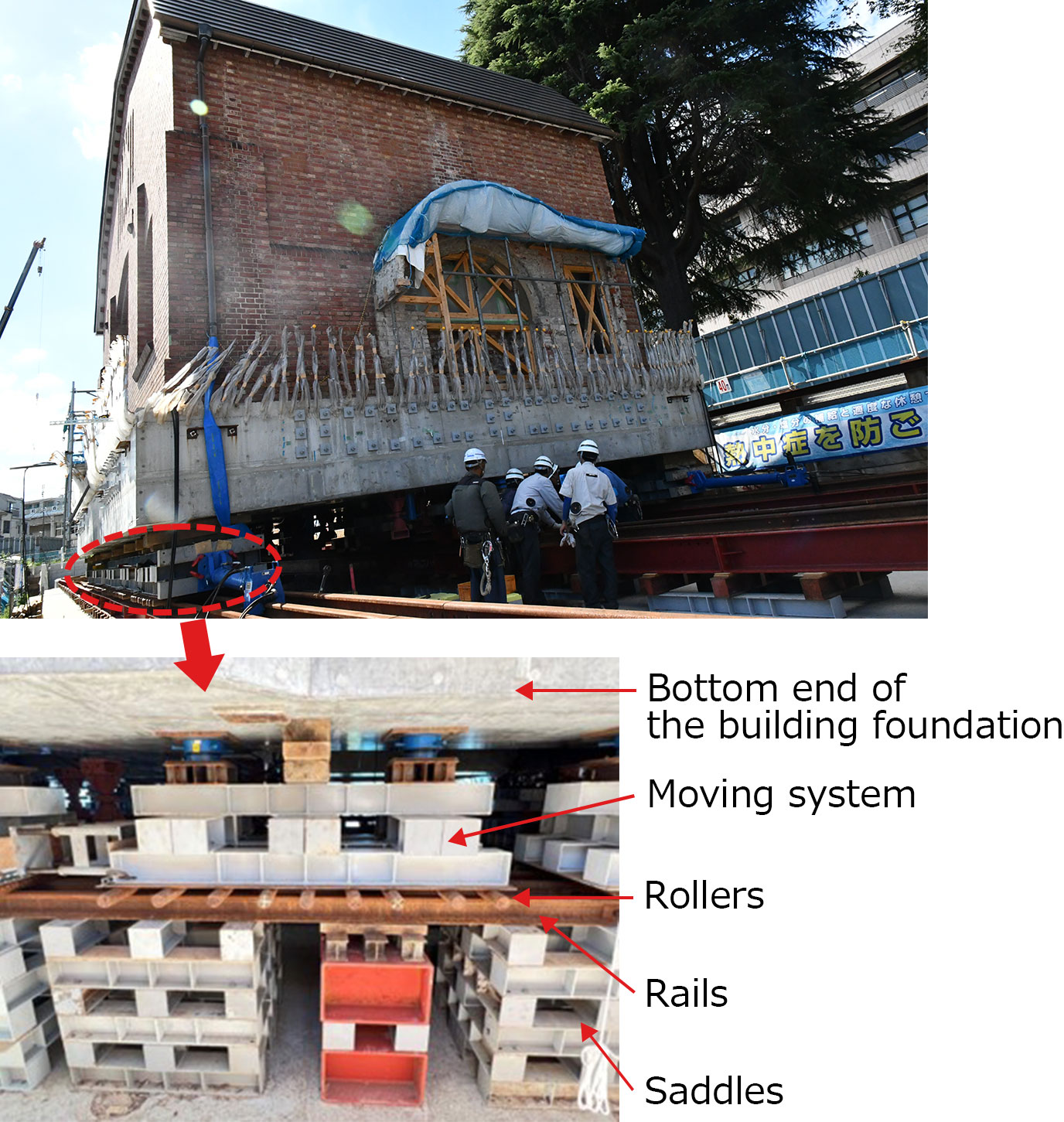
Bottom: Configuration of the equipment used in the relocation process.
Recognizing the Company’s High Technical and Organizational Capabilities
For Wada, both brick construction and building relocation were entirely new experiences. “I was once again reminded of our company’s strong technical and organizational capabilities,” he recalls. The project brought together expertise and know-how from multiple departments across the company.
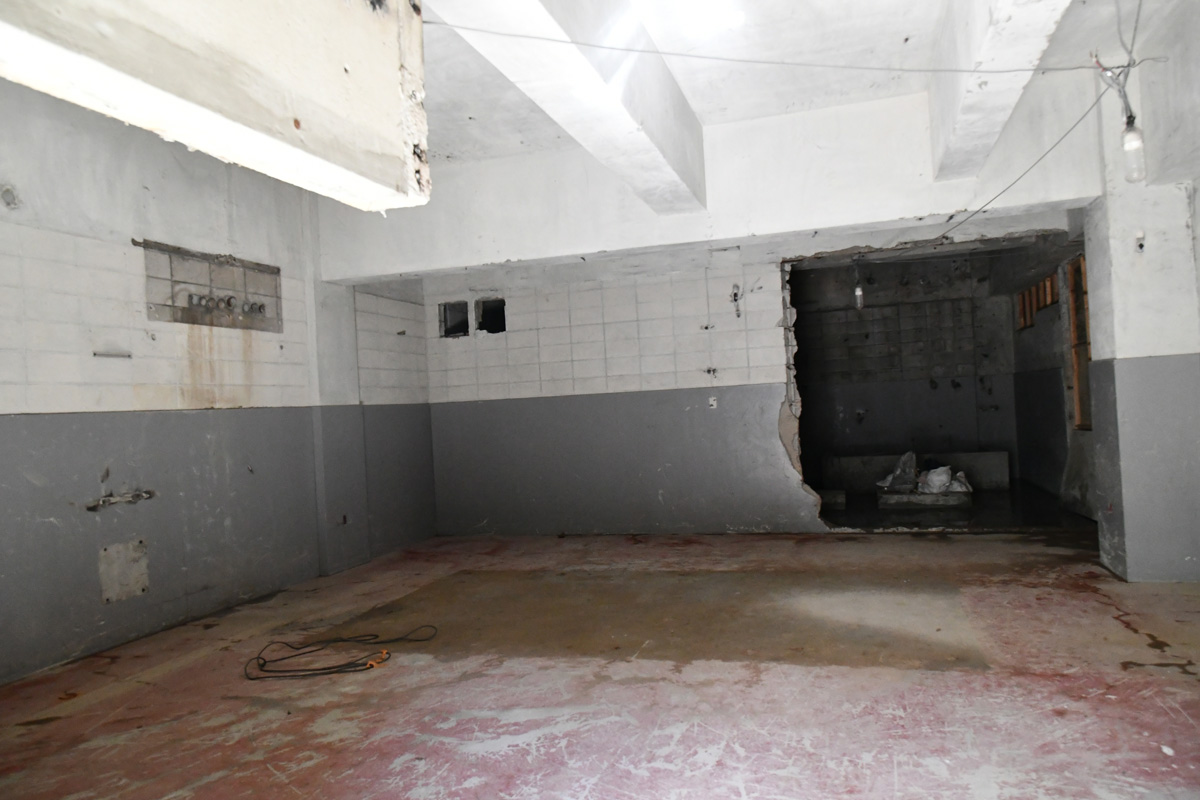
Following the advice of a senior colleague from the Shrine and Housing Construction Department, which was that “the important thing is to try first,” the team conducted a full-scale verification test in an existing basement on the site before pouring the foundation concrete. Using transparent formwork, they confirmed how the concrete flowed to ensure sufficient filling before proceeding with the actual work.
Taking Each Step with Care
Following the relocation, the project will proceed with seismic isolation and restoration, with completion scheduled for February 2027.
“In cultural property restoration, we establish our approach only after thorough verification based on historical records and physical traces, and with the approval of experts,” Wada explains. Because physical evidence is a critical basis for decisions, even a single fragment is carefully preserved. The contractor is not permitted to make unilateral handling decisions. Even with the relocation successfully completed, the work continues under constant vigilance.
“Relocation is only one milestone,” Wada says. “We need to understand the entire process comprehensively and proceed step by step with absolute care. Ultimately, I want to hand over a building that will endure for generations.
His words reflect a strong sense of responsibility and commitment to relocating a cultural property and ensuring it thrives in its new setting.
Overview of Construction
- Address
- 3-37 Arai, Nakano City
- Client
- Nakano City
- Design
- Kenbun Co., Ltd.
- Construction period
- February 2024 - February 2027
- Structure and scale
-
Brick structure, 1 story
Building area: 95 m2
Total floor area: 90 m2
The information posted here is the current information on October 15, 2025.
Please be aware that this information may have changed by the time you view it.